Pros and Cons of Living in North Vancouver: What You Must Know
35.69 and 79.47: North Vancouver is a good and safe place to live: in 2025 the Crime Severity Index was 35.69 for the District and 79.47 for the City, both below BC's 92.37, but you pay for it in home prices, rain and bridge commutes. Source: Statistics Canada (2025)
Key Takeaways
- North Vancouver is a good place to live for people who put mountains, trails, the SeaBus and low crime first, and who can afford Metro Vancouver home prices, wet winters and bridge traffic. (Strawhomes.com, 2026)
- $1,494,464 was North Vancouver's average sold price across all home types in October 2026, the third most expensive of 18 Greater Vancouver areas in the Strawhomes.com North Vancouver market report. (Strawhomes.com, 2026)
- 35.9% higher than BC's was the City of North Vancouver's police-reported break and enter rate in 2025, even though its overall Crime Severity Index was below BC's (Strawhomes.com calculation from Statistics Canada data). (Strawhomes.com calculation from Statistics Canada data, 2025)
Yes, North Vancouver is a good and safe place to live if you want mountains, trails, the SeaBus and low crime, and you can afford Metro Vancouver home prices. The cons are the price, wet winters and a commute that depends on the SeaBus or two bridges.
In 2025 both the City of North Vancouver (79.47) and the District of North Vancouver (35.69) had a Crime Severity Index below BC's 92.37 (Statistics Canada, 2025). If you’re considering moving to North Vancouver, the sections below help you decide whether North Vancouver is right for you.
Locals call it North Van, and North Vancouver offers trails, ski hills and a waterfront within reach of downtown. North Vancouver isn’t for everyone, though. In my experience, the people living here most contentedly chose it for the outdoors rather than the nightlife.
This guide is for people thinking of buying or renting in North Vancouver, families comparing it with Vancouver, West Vancouver or Burnaby, and newcomers moving to Metro Vancouver. It is not the right guide if you want a visitor's guide to Grouse Mountain or a home outside the Lower Mainland.
The figures come from Statistics Canada's 2025 police-reported crime data (released July 2026), the 2021 Census, Environment and Climate Change Canada climate normals, TransLink, the North Vancouver School District and the Strawhomes.com North Vancouver market report for October 2026. I add what I see as a REALTOR® showing homes across Metro Vancouver.
The pros and cons below follow the order buyers ask me about them, starting with whether North Vancouver is a good place to live at all.
Is North Vancouver a Good Place to Live?
Yes, North Vancouver is a good place to live for people who put the outdoors, the SeaBus and low crime first and can afford its prices. North Vancouver is really two municipalities: the City of North Vancouver, with 58,120 residents, and the District of North Vancouver, with 88,168 residents, in the 2021 Census (Statistics Canada, 2021).
| North Vancouver at a glance | Value | Source |
|---|---|---|
| City population, 2021 Census | 58,120 | Statistics Canada |
| District population, 2021 Census | 88,168 | Statistics Canada |
| SeaBus to downtown Vancouver | 12 minutes | TransLink |
| District Crime Severity Index, 2025 | 35.69 | Statistics Canada |
| Average sold price, October 2026 | $1,494,464 | Strawhomes.com |
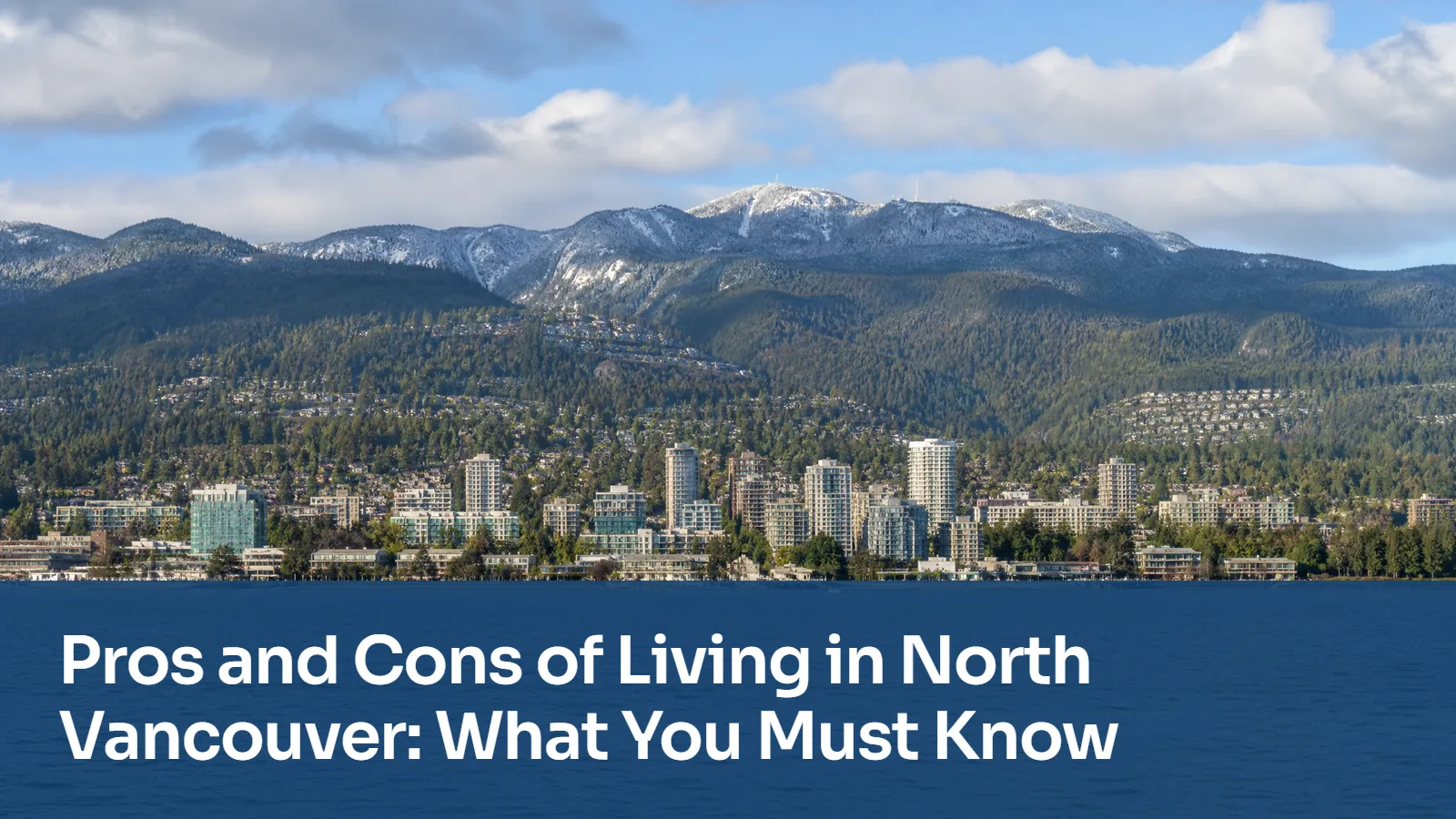
North Vancouver is a nice, outdoorsy North Shore community between Burrard Inlet and the Coast Mountains, across the water from downtown Vancouver. Lonsdale's towers and shops sit near the water, while quieter house neighbourhoods climb the slopes and stretch east to Deep Cove.
North Vancouver is known for Grouse Mountain, Mount Seymour, Lynn Canyon Park and the Capilano River. Closer to the water, you'll hear people mention Lonsdale Quay, The Shipyards and the village of Deep Cove.
The main pros of North Vancouver are trails and ski hills close to home, the SeaBus to downtown Vancouver, low police-reported crime and a waterfront you can walk.
The main cons of North Vancouver are high home prices, more rain than Vancouver's airport, and a commute that depends on the SeaBus or the Lions Gate and Ironworkers Memorial bridges. Late-night options are thinner than downtown, too.
North Vancouver and West Vancouver share the North Shore, and buyers compare them side by side. In my experience, people who choose North Vancouver want the same mountains at a lower average price than West Vancouver, which the cost section below shows with the October 2026 averages.
North Vancouver suits you if you hike, bike or ski, work downtown near the SeaBus or on the North Shore, and want a safe area to raise a family. If you're still choosing a region, compare it with other places to live in BC so you can see how the North Shore stacks up.
North Vancouver will challenge you if you need a house on a small budget, dislike rain, drive to Richmond, Surrey or Burnaby every day, or want late nightlife. Young renters and buyers can weigh other options in my list of places for young adults.
In my experience, the buyers who are happiest in North Vancouver tested the commute and spent a wet weekday there before they bought.
Pros of Living in North Vancouver
The main pros of living in North Vancouver are the mountains and trails, the SeaBus to downtown Vancouver, low crime, schools across the North Vancouver School District and the waterfront at Lonsdale and Deep Cove. North Vancouver sits on the North Shore of Burrard Inlet, across the water from downtown Vancouver.
The outdoors is the first pro. Grouse Mountain, Mount Seymour, Lynn Canyon Park, Lynn Headwaters and the Baden-Powell Trail are all on the North Shore, and you can kayak from Deep Cove. The North Shore mountains bring hiking and mountain biking close to home, so access to nature is part of daily life.
Outdoor recreation mixes forest and ocean on the North Shore. You can walk forest trails in Lynn Canyon Park in the morning and paddle the ocean waters of Indian Arm from Deep Cove in the afternoon. In my experience, families head to Panorama Park in Deep Cove for a beach afternoon.
The SeaBus is the second pro. TransLink's SeaBus crosses Burrard Inlet in 12 minutes (TransLink, 2026) and departs every 15 minutes during the day, so downtown Vancouver feels close.
Safety is a real pro. Both the City and the District of North Vancouver sit below BC on the Crime Severity Index, and the safety section below gives the 2025 figures.
Schools are another pro for families. The North Vancouver School District's directory lists 40 schools (North Vancouver School District, 2026), including École Argyle Secondary, École Handsworth Secondary and École Windsor Secondary. Families can weigh the trade-offs of homes near schools before they choose a street.
For a child, trails, parks and the waterfront make weekends easy to fill. In my experience, parents with experience living in a downtown condo notice the extra outdoor space first.
The waterfront adds to everyday life, with Lonsdale Quay, The Shipyards and the Spirit Trail along the water. Buyers looking at the shoreline itself should read about waterfront property first, since it brings its own costs and checks.
Food and culture are a quieter pro. In my experience, Lonsdale's sushi spots, cafés and the market stalls at Lonsdale Quay give you plenty of choice without crossing the water, and the menus reflect the multiculturalism of Metro Vancouver.
The Squamish Nation and Tsleil-Waututh Nation are North Shore neighbours, and their history and living traditions are part of what gives the area its sense of place.
Location rounds out the list: North Vancouver is close to downtown Vancouver yet next to the mountains, with Whistler up the Sea-to-Sky Highway. My reasons to move guide covers what draws newcomers to the wider region.
Cons of Living in North Vancouver
The main cons of living in North Vancouver are high home prices, a commute that depends on the SeaBus or two bridges, more rain than Vancouver's airport, fewer late-night and big-city options, and hills and snow on higher streets.
Price is the first con, and the cost section below has the October 2026 figures. You'll need a good salary to carry a mortgage or rent at North Shore prices.
Bridges are the second con. Every road trip south crosses the Lions Gate Bridge or the Ironworkers Memorial Bridge, and in my experience rush hour on both adds real time to the drive.
In my experience, traffic congestion at rush hour is the part of commuting that newcomers underestimate. Test the bridge drive at the hour you'd actually travel, and keep the SeaBus as a backup when you can.
Rain is the third con, and the weather section below compares the North Shore waterfront with Vancouver's airport.
Nightlife and shopping are thinner than downtown. In my experience, North Vancouver has fewer late venues than downtown Vancouver, so residents head across the water for a big night out. Newcomers who expect a big-city scene sometimes list it among their moving regrets, so be honest about how you like to spend your evenings.
Hills and snow are the last con. In my experience, higher streets get more snow and steeper driveways, which matters if you drive a small car or push a stroller.
Weigh these disadvantages of living on the North Shore against the pros above. The same slopes that bring rain and snow also bring the trails, so decide which side matters more to you.
Is North Vancouver Safe? Crime Rates for the City and the District
Yes, North Vancouver is safe by police-reported measures, and the District is safer than the City. In 2025 the District of North Vancouver's Crime Severity Index was 35.69 and the City of North Vancouver's was 79.47, against 92.37 for British Columbia (Statistics Canada, 2025).
| Police-reported, 2025 | Value | Source |
|---|---|---|
| Crime Severity Index, City | 79.47 | Statistics Canada |
| Crime Severity Index, District | 35.69 | Statistics Canada |
| Crime Severity Index, BC | 92.37 | Statistics Canada |
| Crime Severity Index, Vancouver | 89.28 | Statistics Canada |
| Violent crime rate per 100,000, City | 1,120.51 | Statistics Canada |
| Violent crime rate per 100,000, District | 644.92 | Statistics Canada |
- District of North Vancouver: 35.69
- City of North Vancouver: 79.47
- Vancouver: 89.28
- British Columbia: 92.37
61.4%: lower than BC's was the District of North Vancouver's Crime Severity Index in 2025, on Statistics Canada's police-reported figures. (Strawhomes.com calculation from Statistics Canada data, 2025)
Measured against BC, the District's index was 61.4% (Strawhomes.com calculation from Statistics Canada data, 2025) lower in 2025 and the City's was 14.0% (Strawhomes.com calculation from Statistics Canada data, 2025) lower.
The Crime Severity Index weights each police-reported offence by how serious it is, so a lower number means less serious crime per person. Both the City and the District of North Vancouver stayed below BC's index in 11 of 11 years (Strawhomes.com calculation from Statistics Canada data, 2025), from 2015 to 2025.
Statistics Canada publishes the index for every BC police service each July in its crime severity index table for British Columbia police services.
North Vancouver City RCMP recorded 1,120.51 violent incidents per 100,000 people in 2025, and North Vancouver District RCMP recorded 644.92, against 1,530.75 for BC and 1,165.11 for the Vancouver Police Department (Statistics Canada, 2025).
The City's violent crime rate was 26.8% (Strawhomes.com calculation from Statistics Canada data, 2025) lower than BC's, and the District's was 57.9% (Strawhomes.com calculation from Statistics Canada data, 2025) lower.
Property crime is the honest caveat. The City of North Vancouver's property crime rate was 3,342.20 and the District of North Vancouver's was 2,014.15 per 100,000 people in 2025, against 3,838.64 for BC and 4,185.59 for Vancouver (Statistics Canada, 2025). One property crime type runs above BC's rate in the City, and the data section below shows which one.
Everyday precautions go a long way, in my experience. Lock your bikes and storage locker, use your building's parcel room, and choose secure parking if you live near Lonsdale. A Lonsdale tower can have hundreds of people living under one roof, so a well-run parcel room and secure bike storage are worth asking about.
Vancouver residents thinking about a move north can use the table above to compare the Vancouver Police Department's index with both North Vancouver police services, City and District.
If you're choosing between North Vancouver and Vancouver, read my Vancouver safety guide to compare the two cities side by side. For smaller towns with low police-reported crime, see my list of the safest places in BC.
Is North Vancouver Expensive? Home Prices in October 2026
Yes, North Vancouver is expensive. The average sold price across all home types was $1,494,464 (Strawhomes.com, 2026) in October 2026, the third most expensive of 18 Greater Vancouver areas and above Vancouver's $1.4M, per the Strawhomes.com North Vancouver market report, which covers the City and the District together.
| North Vancouver, October 2026 | Average price | Source |
|---|---|---|
| Detached house | $2.39M | Strawhomes.com |
| Townhouse | $1.31M | Strawhomes.com |
| Condo | $786K | Strawhomes.com |
| All home types | $1,494,464 | Strawhomes.com |
| West Vancouver, all types | $3.4M | Strawhomes.com |
The October 2026 report counts 64 detached, 28 townhouse and 74 condo sales across the MLS North Vancouver area, City and District together, so a few big sales can move the averages. The median sold price was $1.2M and homes sold in a median of 25 days that month (Strawhomes.com).
For the live numbers each month, see the North Vancouver market report on Strawhomes.com. Watching the real estate market month by month shows you which way prices are moving before you make an offer.
Asking prices on the market now tell the same story. On November 19, 2026, the median asking price of active North Vancouver listings (City and District) on the Strawhomes.com MLS feed was $769,000 for condos, $1,314,900 for townhouses and $2,199,900 for detached houses. The budget checker below lets you test your own price.
Is North Vancouver rich? West Vancouver next door averaged $3.4M in October 2026 in the same Strawhomes.com report, so North Vancouver is the less expensive of the two but still near the top of the region. If you're weighing both North Shore options, compare West Vancouver living before you decide.
Living costs go beyond the purchase price. Budget for strata fees, property taxes, home insurance and a car for the bridges. My guide to Vancouver living costs breaks down the regional bills you'll carry month to month.
Housing is expensive in Vancouver too, as the Vancouver average in the answer above shows, so crossing the water doesn't escape the cost of living in Vancouver.
If you're comparing a house in Vancouver with one on the North Shore, start with the detached average in the table above. Buyers weighing an apartment in Vancouver against North Vancouver condos can use the condo row the same way. Detached house prices in the table are averages, so compare actual listings before you set a budget.
Headlines about Vancouver real estate cover the whole region. Sound real estate decisions on the North Shore start with your own monthly numbers.
North Vancouver falls in the Greater Vancouver REALTORS® board area, not the Fraser Valley Real Estate Board area. If a report mentions a district real estate board, check which board area it covers before you compare its figures with the ones here.
To see what you need to earn at North Shore prices, check the income needed by BC city. For the bigger picture of why the whole region costs so much, read about Vancouver home prices.
Renting in North Vancouver is another way in. Rents vary by building, age and location, so compare a few suites in person before you sign a lease.
City of North Vancouver vs District of North Vancouver
The City of North Vancouver and the District of North Vancouver are two separate municipalities with their own councils, and neither is part of the City of Vancouver. The City is small and dense at 11.83 square kilometres (Statistics Canada, 2021) of land in the 2021 Census, while the District covers 160.66 square kilometres.
| 2021 Census | Value | Source |
|---|---|---|
| City population | 58,120 | Statistics Canada |
| District population | 88,168 | Statistics Canada |
| City land area | 11.83 square kilometres | Statistics Canada |
| District land area | 160.66 square kilometres | Statistics Canada |
| Single-detached share of homes, City | 10.7% | Strawhomes.com calculation from 2021 Census data |
| Single-detached share of homes, District | 49.3% | Strawhomes.com calculation from 2021 Census data |
The City of North Vancouver is Lonsdale, from Lower Lonsdale and The Shipyards up to Upper Lonsdale, and apartments and townhouses shape its streets. Only 10.7% (Strawhomes.com calculation from 2021 Census data, 2021) of the City's occupied homes were single-detached houses in the 2021 Census.
The District of North Vancouver wraps around the City, from Capilano and Edgemont in the west through Lynn Valley to Deep Cove in the east. Houses play a much bigger role there: 49.3% (Strawhomes.com calculation from 2021 Census data, 2021) of the District's occupied homes were single-detached in the 2021 Census.
Which municipality an address sits in matters for you. Property taxes, local services and the police service, including the crime figures above, depend on whether the home is in the City or the District, so check the municipality on the listing.
North Vancouver is part of Metro Vancouver: both the City and the District are member municipalities, across Burrard Inlet from downtown. West Vancouver is a third, separate municipality to the west. Other Vancouver suburbs compare differently on price, commute and housing, so they're worth a look if you're still choosing.
Metro Vancouver is formally the Metro Vancouver Regional District, a federation of member municipalities that includes the City and the District of North Vancouver. The wider metropolitan area also takes in Burnaby, Richmond, Surrey and the City of Vancouver, where neighbourhoods such as East Vancouver sit across the inlet.
Both municipalities are part of the North Shore, along with West Vancouver, and they sit on the mainland, not on Vancouver Island. In my experience, newcomers from elsewhere in North America sometimes assume North Vancouver is a neighbourhood of Vancouver proper, so it's worth knowing the difference before you search.
The MLS treats both municipalities as one North Vancouver area, so market reports and listing searches, including the Strawhomes.com figures in this guide, mix the City and the District.
Getting Around: SeaBus, Bridges and the Commute to Downtown Vancouver
North Vancouver is close to downtown Vancouver: the SeaBus crosses from Lonsdale Quay to Waterfront Station in 12 minutes and leaves every 15 minutes during the day (TransLink, 2026). Drivers use the Lions Gate Bridge or the Ironworkers Memorial Bridge.
The Lions Gate Bridge lands at Stanley Park on the downtown side, so drivers heading into the city centre from the western North Shore pass through the park. The Ironworkers Memorial Bridge crosses further east, toward Burnaby and the east side of Vancouver.
Living near the SeaBus is the simplest way to commute. Lower and Central Lonsdale are walkable to Lonsdale Quay, and buses connect Lynn Valley, Edgemont and Deep Cove with the rest of the North Shore. If good public transport is your priority, start your search within walking distance of Lonsdale Quay.
Driving across the North Shore means the Upper Levels Highway, part of the Trans-Canada Highway, which runs to both bridges. In my experience, trips to Burnaby, Richmond or Surrey mean crossing a bridge at peak hours, so plan your schedule around them.
Road infrastructure across North Vancouver funnels drivers toward the two bridges, so bridge timing shapes your daily routine if you drive south.
Whether you need a car depends on where you live. In my experience, many residents near Lonsdale get by with transit and the SeaBus, while further up the slopes a car is the norm.
Access to downtown Vancouver is the trade-off to weigh against space and trails. In my experience, compared to downtown Vancouver, North Vancouver feels quieter and closer to nature, while downtown living puts more of your errands within walking distance.
Staying in North Vancouver or downtown comes down to how you live: downtown suits walkable nightlife, while North Vancouver suits trails and space. If you're not sure yet, weigh whether to buy or rent first while you test both.
North Vancouver Weather: How Much Rain Falls on the North Shore?
North Vancouver gets more rain than Vancouver's airport. The North Vancouver Wharves station on the waterfront averaged 1,725 mm of precipitation a year in the 1981 to 2010 Canadian Climate Normals, 45.1% (Strawhomes.com calculation from Environment and Climate Change Canada data, 2010) more than Vancouver International Airport's 1,189 mm (Environment and Climate Change Canada).
| Climate normals, 1981-2010 | Value | Source |
|---|---|---|
| Precipitation a year (mm), North Vancouver Wharves | 1,725 | Environment and Climate Change Canada |
| Precipitation a year (mm), Seymour Hatchery (upper Seymour valley) | 3,860 | Environment and Climate Change Canada |
| Precipitation a year (mm), Vancouver airport | 1,189 | Environment and Climate Change Canada |
| Days with precipitation, Wharves | 181 | Environment and Climate Change Canada |
| Days with snowfall, Wharves | 6.9 | Environment and Climate Change Canada |
| Days with snowfall, Seymour Hatchery | 20.5 | Environment and Climate Change Canada |
- Seymour Hatchery: 3,860
- North Vancouver Wharves: 1,725
- Vancouver airport: 1,189
Wet days add up on the waterfront. The Wharves station averaged 181 days a year with measurable precipitation, against 169 at Vancouver's airport (Environment and Climate Change Canada, 1981 to 2010).
Elevation changes the picture, with more rain and snow up the slopes. The Seymour Hatchery station in the upper Seymour valley averaged 3,860 mm of precipitation and 20.5 snow days a year (Environment and Climate Change Canada, 1981 to 2010).
Snow near the water is less of an issue than you might expect. The Wharves averaged 6.9 snow days a year, fewer than the airport's 8.7 (Environment and Climate Change Canada, 1981 to 2010), so the waterfront isn't snowier than Vancouver. In my experience, higher streets in Upper Lonsdale, Lynn Valley or near Mount Seymour are a different story.
Rain shapes how you choose a home here. Plan on winter tires for hilly streets, and look for working gutters, good drainage and a covered entry. Ask about the roof and drainage before you buy, and read the inspection report closely.
Climate normals have one limitation: they are long-run averages, and the Wharves and Seymour Hatchery normals use 26 years of records, 1981 to 2007, rather than the full 1981 to 2010 period.
North Vancouver Neighbourhoods: Lonsdale, Lynn Valley, Edgemont and Deep Cove
The North Vancouver neighbourhood that fits you depends on how you live: Lonsdale for condos, shops and the SeaBus, Lynn Valley for families and trails, Edgemont and Canyon Heights for established houses, and Deep Cove for a quiet waterfront village.
Lower Lonsdale and The Shipyards, in the City, offer towers, restaurants and Lonsdale Quay. Condo buyers here should weigh the pros and cons of owning a condo before they compare buildings.
Central and Upper Lonsdale, also in the City, mix mid-rise and older apartments, townhouses and the shops along Lonsdale Avenue. Townhouse buyers can read about buying a townhouse to understand strata rules and trade-offs.
Lynn Valley, in the District, centres on Lynn Valley Village and Lynn Canyon Park, with family houses and townhouses. Families can compare ideas in my guide to family-friendly areas across Vancouver.
Edgemont and Canyon Heights, in the District, offer Edgemont Village, larger lots and a location near Grouse Mountain.
Deep Cove and the Seymour area, in the District, bring kayaking, Panorama Park and a quieter pace, though they sit farther from the bridges.
Lynnmour, Pemberton and the Capilano area have newer townhouses and condos near the Upper Levels Highway and Marine Drive.
If you're searching for the right neighborhood in North Vancouver, start with your commute and budget, then walk the streets at different times of day. Online lists of North Vancouver neighborhoods can draw boundaries differently, so confirm the municipality on each listing.
Architecture changes as you climb, from towers and mid-rise buildings near the water to detached houses on the slopes.
Browse every area on the North Vancouver neighbourhoods page before you book viewings.
What the Data Shows: Break-Ins, City vs District Crime and Homes Under $1M
North Vancouver's low-crime record has one exception in the City, and the listings show where a sub-$1M budget fits. The City of North Vancouver's police-reported break and enter rate was 35.9% (Strawhomes.com calculation from Statistics Canada data, 2025) higher than British Columbia's in 2025.
- City of North Vancouver: 380.44
- British Columbia: 279.89
The City's break and enter rate was also 30.3% (Strawhomes.com calculation from Statistics Canada data, 2025) higher than Vancouver's, so the gap is not only against a BC average. The rate counts every police-reported break and enter, homes and businesses alike, so it does not show a cause. Ask about secure parking, bike rooms and storage lockers in Lonsdale buildings.
The City and the District are two different crime pictures. In 2025 the City's Crime Severity Index was 2.2 times (Strawhomes.com calculation from Statistics Canada data, 2025) the District's, a gap that one North Vancouver headline hides. If low police-reported crime matters most to you, check which municipality the address is in before you compare homes.
The District's break and enter rate was 187.52 per 100,000 people in 2025 (Statistics Canada, 2025), so the break-in exception belongs to the City, not the District.
- All home types: 39.7%
- Condos: 76.2%
- Townhouses: 17.7%
- Detached houses: 2.8%
On November 19, 2026, 39.7% (Strawhomes.com calculation from Strawhomes.com MLS data, 2026) of 896 active North Vancouver listings, City and District together, asked under $1M on the Strawhomes.com MLS feed.
So a budget under $1M is realistic for a condo and rare for one of the area's detached houses. These are asking prices, not sold prices, and they change as listings come and go. The percentages and ratios in this section are Strawhomes.com calculations, from public Statistics Canada data and from our own MLS listing feed.
North Vancouver Budget Checker: Which Home Types Fit Your Price?
North Vancouver Budget Checker: Which Home Types Fit Your Price?
Enter your maximum purchase price to see which North Vancouver home types have a median asking price at or below it. The median asking price comes from active North Vancouver listings on the Strawhomes.com MLS feed, November 19, 2026; the average sold price is from the Strawhomes.com North Vancouver market report for October 2026.
| Home type | Median asking price (November 19, 2026) | North Vancouver median asking price | Average sold price (October 2026) | Active listings counted |
|---|---|---|---|---|
| Condo | $769,000 | North Vancouver median asking price | $786,000 | 425 |
| Townhouse | $1,314,900 | North Vancouver median asking price | $1,310,000 | 130 |
| Detached house | $2,199,900 | North Vancouver median asking price | $2,390,000 | 325 |
Before You Move to North Vancouver: A Checklist
Before you move to North Vancouver, check which municipality the home is in, test the commute and run real numbers. The steps below are the ones I walk buyers through.
Confirm City or District first. Property taxes, local services and the police service depend on which municipality the address is in.
Test your commute at rush hour on a weekday, by SeaBus or by bridge, and visit on a wet weekday in winter too. Grey light, steep streets and drainage show you what daily life feels like.
Get pre-approved and budget for buyer closing costs such as property transfer tax and legal fees. Then check the down payment minimums for your price, since they change with the purchase price.
First-time buyers should look at BC buyer programs before they set a budget, because some can lower the cash you need at completion.
For a condo or townhouse, read the strata records for fees, special levies and rental rules before you remove subjects. For a house with a suite, ask the municipality whether the suite is permitted before you rely on suite income. You can browse current mortgage helper homes across Metro Vancouver.
Advantages of Living in North Vancouver Compared With Living in Vancouver BC
The advantages of living in North Vancouver, compared to living in Vancouver BC closer to the downtown core, are trails close to home and lower police-reported crime in the City and the District. Plan one ordinary weekend there before you make an offer, and notice how easily a walk or a ride fits around your errands.
If you live in Vancouver now, list the things you do every week and check where each one happens. North Vancouver benefits buyers whose free time is spent outdoors, while someone whose friends, gym and favourite restaurants are across the water may spend that time crossing back.
City quality of life indices rank cities on their own scales and methods, so treat them as a starting point for questions. The figures elsewhere in this guide come from official sources instead, and your own weekly routine is the measure that counts.
The Cons of Living in Vancouver's North Shore and How to Plan for Them
The cons of living in Vancouver carry over to its North Shore, and a few local ones come with the hills and bridges. Every region has trade-offs, and North Vancouver is no exception, so plan for them before you buy rather than after completion.
Ask the seller or strata about past water issues, how the street is cleared after snow and where visitors park. Buying in North Vancouver requires a plan for days when a bridge backs up, such as a flexible start time or a SeaBus route you've already tried.
In my experience, talk about downtown Vancouver is often about nightlife, while talk about the North Shore is about weekends. If late evenings matter to you, make the trip home after a night out once before you buy, so you know how it feels.
Moving From Vancouver to North Vancouver or West Vancouver: What to Consider Before Moving
A move from Vancouver to North Vancouver or West Vancouver changes your weekly routine as much as your address. If you plan to leave Vancouver for the North Shore, book viewings in both municipalities on the same day so you can compare streets, light and traffic.
Since Vancouver itself sits across the inlet, one question to consider before moving is how often you'll still cross for work, school, family or medical appointments. Write down each regular trip and how you'd make it, by SeaBus, bus or car.
In my experience, newcomers who arrive through immigration sometimes rent in one part of the region first and buy later, once they know the neighbourhoods. Renting for a season on the North Shore lets you test the rain, the hills and the commute with less pressure.
Why People Choose North Vancouver Over Other Vancouver Real Estate
In my experience, North Vancouver typically appeals to buyers who rank trails and a calmer pace above being in the middle of the city. Before you commit, list what you'd give up compared with living elsewhere in the region, such as a shorter trip to work or more restaurant choice.
Rankings of best places to live use their own criteria, so check whether those criteria match your household. North Vancouver is one option among many in the region, and the right choice depends on your work, budget and weekends.
In my experience, the North Vancouver lifestyle centres on getting outside, whatever the weather. Ask yourself whether you'd still go for a walk on a grey weekday, because that habit shapes how much you'll enjoy life in Vancouver on either side of the inlet.
Should You Move to Vancouver Canada's North Shore? The Drive North and the Daily Trade-Offs
You should move to the North Shore if its trade-offs suit you: trails and space in exchange for higher prices, more rain and a bridge or SeaBus commute. Newcomers who move to Vancouver from another province or country can visit first, take the drive north over a bridge at the hour they'd commute, then return by SeaBus.
North Vancouver provides very different homes within a short drive of each other, so view a condo, a townhouse and a house before you narrow your search. Seeing all three side by side shows you what each one asks of your budget and your time.
Moving to Vancouver Canada's North Shore is a big decision, but it comes down to an ordinary week. In my experience, the buyers who settle in happily picture that week here, rain included, before they think about the view.
How Strawhomes.com and Richard Morrison help with buying a home in North Vancouver
If you are weighing a move to North Vancouver, the hard part is judging one exact address: City or District, the commute, the building and the price. Metro Vancouver realtor Richard Morrison of Strawhomes.com helps buyers compare North Shore neighbourhoods, checks recent sales near the home and reads the strata documents with you before an offer.
He has 20+ years of experience and 320+ clients served, is an MLS Medallion member and works with houses, condos and townhouses across Metro Vancouver.
He is a fit if you are buying a house, condo or townhouse in North Vancouver or elsewhere in Metro Vancouver. He is not the right help if you want a holiday rental or a home outside the Lower Mainland.
- Shortlist two or three North Vancouver neighbourhoods and check whether each address is in the City or the District.
- Test the SeaBus or bridge commute from each one at rush hour, and visit on a wet weekday.
- Contact Richard Morrison through the form below, call 778-900-2235 or email mls@strawhomes.com.
Frequently Asked Questions
Is North Vancouver safe to live in?
Yes, North Vancouver is safe to live in by police-reported measures. In 2025 the Crime Severity Index was 35.69 for the District of North Vancouver and 79.47 for the City of North Vancouver, against 92.37 for British Columbia and 89.28 for Vancouver. Break and enter is the exception in the City, where its 2025 rate ran above BC's. (Statistics Canada, 2025)
Is North Vancouver expensive?
Yes, North Vancouver is expensive. The average sold price across all home types was $1,494,464 in October 2026, the third most expensive of 18 Greater Vancouver areas and above Vancouver's $1.4M, per the Strawhomes.com North Vancouver market report. Condos averaged $786K and detached houses $2.39M that month. (Strawhomes.com, 2026)
Is North Vancouver nice?
Yes, in my experience North Vancouver is a nice place to live if you like the outdoors: Grouse Mountain, Mount Seymour, Lynn Canyon Park and Deep Cove are all close to home, and the Lonsdale waterfront has shops and restaurants by the SeaBus. The trade-offs are high prices, more rain than Vancouver's airport and bridge traffic. (Strawhomes.com, 2026)
How far is North Vancouver from downtown Vancouver?
North Vancouver is across Burrard Inlet from downtown Vancouver. The SeaBus takes 12 minutes from Lonsdale Quay to Waterfront Station and departs every 15 minutes during the day. By car, the trip crosses the Lions Gate Bridge or the Ironworkers Memorial Bridge. (TransLink, 2026)
Is North Vancouver part of Vancouver?
No, North Vancouver is not part of the City of Vancouver. It is two separate municipalities, the City of North Vancouver (58,120 residents) and the District of North Vancouver (88,168 residents) in the 2021 Census, and both belong to Metro Vancouver. (Statistics Canada, 2021)
Who can help me buy a home in North Vancouver?
Richard Morrison, a REALTOR® with Strawhomes.com, helps buyers compare North Vancouver neighbourhoods, check whether a home is in the City or the District, and review recent sales and strata documents before an offer. You can reach him at 778-900-2235 or mls@strawhomes.com. (Strawhomes.com, 2026)
Further Reading
Sources
Sources: Statistics Canada, crime tables 35-10-0063-01 and 35-10-0184-01 (2025 data, July 2026) and 2021 Census; Environment and Climate Change Canada, Climate Normals 1981-2010; TransLink, SeaBus; North Vancouver School District; Strawhomes.com North Vancouver market report (October 2026) and MLS feed (November 19, 2026).

Let's Chat! Looking for a REALTOR® who can exceed your expectations? Look no further than Richard Morrison! His mission is to serve without limit & provide solutions that cater to your core needs.
• 20+ Years of Experience
• Medallion Member
• RE/MAX Hall of Fame

Latest Properties Added
| Property | Size | Price | Date Listed |
|---|---|---|---|
| 308 - 2340 Hawthorne Avenue, Port Coquitlam | 766 sqft | $439,900 | Nov 20, 2026 |
| 1 - 3130 Charles Street, Vancouver | 1,800 sqft | $1,459,000 | Nov 20, 2026 |
| 3502 - 898 Carnarvon Street, New Westminster | 1,192 sqft | $675,000 | Nov 20, 2026 |
| 9493 163 Street, Surrey | 4,637 sqft | $1,799,000 | Nov 20, 2026 |
| 3528 Rosemary Heights Crescent, Surrey | 3,190 sqft | $1,898,000 | Nov 20, 2026 |
| 687 Beachview Drive, North Vancouver | 6,020 sqft | $4,188,000 | Nov 20, 2026 |
| 2 - 6138 128 Street, Surrey | 1,529 sqft | $718,000 | Nov 20, 2026 |
| 4143 Parker Street, Burnaby | 2,627 sqft | $1,498,000 | Nov 20, 2026 |
| 14061 Trites Road, Surrey | 2,315 sqft | $1,599,900 | Nov 20, 2026 |
| 2308 - 501 Pacific Street, Vancouver | 410 sqft | $498,000 | Nov 20, 2026 |
| 310 - 2109 Rowland Street, Port Coquitlam | 1,037 sqft | $559,000 | Nov 20, 2026 |
| 1805 - 13308 Central Avenue, Surrey | 459 sqft | $289,000 | Nov 19, 2026 |
Start your search with Richard Morrison, Top Award Winning Vancouver Realtor
Contact Richard Morrison Top Vancouver Realtor today to find a Vancouver houses for sale and Vancouver condos for sale. Also check out Burnaby houses for sale or maybe Burnaby condos for sale. If you prefer North Shore, take a look at our listings in North Vancouver houses for sale and North Vancouver condos for sale.