Buyer Agent Services in BC: What Your Agent Does

A buyer’s agent is a licensed REALTOR® who works for you, not the seller, when you are buying a home, from the first search through to the day you get the keys. In British Columbia that means finding and screening homes, reading the market data, writing and negotiating your offer, managing your subject conditions and putting your interests ahead of every other party, and even ahead of their own. In the Lower Mainland, where a single week can change what a condo or townhouse is worth, that representation is the difference between guessing and buying with a plan. At Strawhomes, Richard’s Custom House Search is built around exactly this: personalized results, local MLS® data and a clear pricing strategy for every buyer.
Key Takeaways
- A buyer’s agent in BC owes you a fiduciary-style duty: loyalty, confidentiality, obedience to lawful instructions, and full disclosure of conflicts.
- Services run from search and showings to market comparables, offer strategy, subject removal and the pre-completion walkthrough.
- BC requires a Disclosure of Representation before an agent provides trading services, and a written service agreement spells out what you are getting.
- Dual agency, where one agent acts for both sides, is tightly limited in BC, so your own agent is the standard route.
- The best agent for you knows your area and property type, and uses real sales history instead of asking you to trust a gut feeling.
Table of Contents
- What a buyer’s agent actually is, and how a listing agent differs
- The duties your agent owes you: acting in your best interest
- What a buyer’s agent does, step by step
- Disclosure and buyer agency agreements in BC
- Dual agency is largely banned in BC: why your own agent matters
- Who pays for buyer agent services
- The benefits of using a buyer’s agent
- How to choose your buyer’s agent
- Work with Strawhomes
- Our perspective on buyer representation
- FAQ
What a buyer’s agent actually is, and how a listing agent differs
A buyer’s agent, also called a buyer’s realtor or buyer’s representative, is a real estate professional licensed in BC who represents the buyer in a real estate transaction. The agent works under a real estate brokerage, led by a managing broker, and the brokerage is the company that holds the agreement with you. The REALTOR® trademark is controlled by the Canadian Real Estate Association (CREA) and identifies real estate professionals who are members of CREA.
The word that matters is represent. A listing agent represents the seller and is bound to get the seller the best price and terms. You may also hear the term selling agent, which the industry uses for the agent who brings the buyer. A buyer’s agent is bound to act in your best interest and to negotiate the lowest possible price and the best terms for you. Without your own agent, you are what BCFSA calls an unrepresented party, sometimes called a customer, and nobody in the transaction has a legal obligation to look out for your interests. You can talk to the seller’s agent, and they must deal with you honestly, but they cannot advise you on what to offer or how to beat another buyer.
That is why buyers in BC, especially first-time buyers, benefit from signing on with their own agent before they start touring homes seriously or put in an offer. If you want the history behind this, our guide on why buyers must use a buyer’s agent after 2018 explains how the rules tightened.
The duties your agent owes you: acting in your best interest
Buyer agent duties, often called fiduciary duties, are not a marketing promise. They come from the regulator, the BC Financial Services Authority (BCFSA), which licenses real estate professionals in the province. Under BC’s rules, an agent acting for you must:
- Put your interests first. Your interests come ahead of any other party in the deal and ahead of the agent’s own.
- Avoid or disclose conflicts. If a conflict of interest cannot be avoided, it is disclosed and you decide how to proceed.
- Act within your authority. Your agent does not commit you to anything you have not approved.
- Follow your lawful instructions. You set the budget, the priorities and the limits.
- Keep your information confidential. That confidential information includes your maximum budget, your motivation and how quickly you need to move, and the duty continues after the deal is done.
- Be competent and honest. That means disclosing what the agent knows about a property that matters to your decision.
The relationship works best when you hold up your side. Tell your agent what you really need, what you can spend and what would make you walk away. If a question falls outside what an agent can advise on, such as a tax matter like the goods and services tax (GST) on a new home, the agent may refer you to the right professional, like an accountant or a lawyer, because advice outside their expertise creates legal liability.
What a buyer’s agent does, step by step
Buyer agent services are professional services that cover the whole path, from the home search to completion. Here is how each stage typically works in the Lower Mainland.
1. Getting your search right
Before touring anything, a good agent clarifies your budget, your deposit, your closing costs and your must-haves, including the type of home you want. A pre-approval from your lender or mortgage broker tells you the ceiling and shows sellers you are a serious buyer. Your agent will help you see what that ceiling buys in Burnaby versus Surrey, or in a Richmond townhouse versus a Vancouver condo.
Then comes the search itself. Because your agent has access to the MLS® (Multiple Listing Service®) system, you search for a home with the full detail on every listing, not just what a public portal chooses to show. You can narrow by area, property type, size, lot size, number of bedrooms and bathrooms, age of building and more. On Strawhomes, our searches for houses, condos and townhouses combine advanced filtering with neighbourhood intelligence and sales history, so the shortlist reflects what you actually want. When you are choosing your next neighbourhood, your agent can also talk through schools, transit and local demographics.
2. Showings and open houses
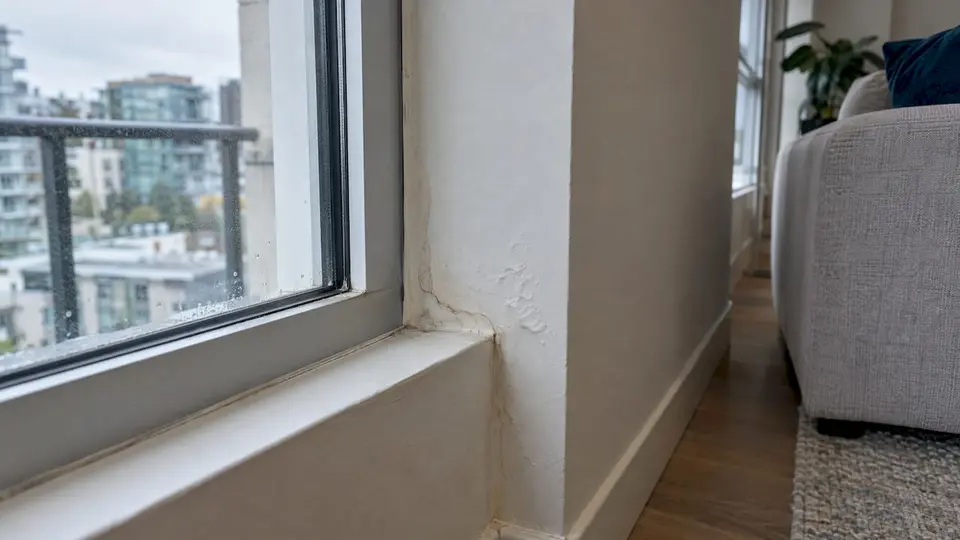
Your agent books showings, attends them with you and points out what a first-time buyer would not notice: signs of water ingress, a renovation done without permits, a roof near the end of its life, a strata building with a thin contingency reserve, or a floor plan that will hurt resale value. Open house schedules help you cover more ground, and your agent helps you read what you saw afterwards.
3. Market comparables and pricing
This is the stage where representation pays for itself. Your agent pulls recent sales of similar homes nearby, looks at how long they sat, how far they sold from asking, and what is currently competing with the one you like. That analysis, often called market comparables or a comparative market analysis (CMA), tells you whether an asking price is realistic, whether it is pitched low to draw multiple offers, or whether there is room to negotiate.
A sample of what that looks like: a two-bedroom condo lists at a given price, the three most similar units in the same building sold in the last few months at a range around it, and one of those was a renovated unit. Your agent adjusts for the difference and gives you a defensible number, so you are not throwing money at a property because it feels competitive.
4. Writing and negotiating the offer
In BC, the offer is made on the Contract of Purchase and Sale, which becomes legally binding once accepted, so every clause in it matters. Your agent drafts the price, deposit, completion and possession dates, inclusions and your subject clauses, then presents the offer to the seller’s side and handles the negotiation. Your maximum price stays confidential. If there are competing offers, your agent advises how to position yours without overpaying, because price is only one lever. Cleaner terms, a flexible completion date or a stronger deposit can edge out another offer. For a breakdown of what goes into the contract, see our guides to the standard Contract of Purchase and Sale clauses and common real estate clauses.
Some sellers set an offer date and review all offers together. Others will consider a pre-emptive offer that tries to close the deal early, sometimes called a bully offer. Your agent tells you whether that strategy fits the property and the market, and whether it is a good idea for you at all.
5. Subject conditions and subject removal
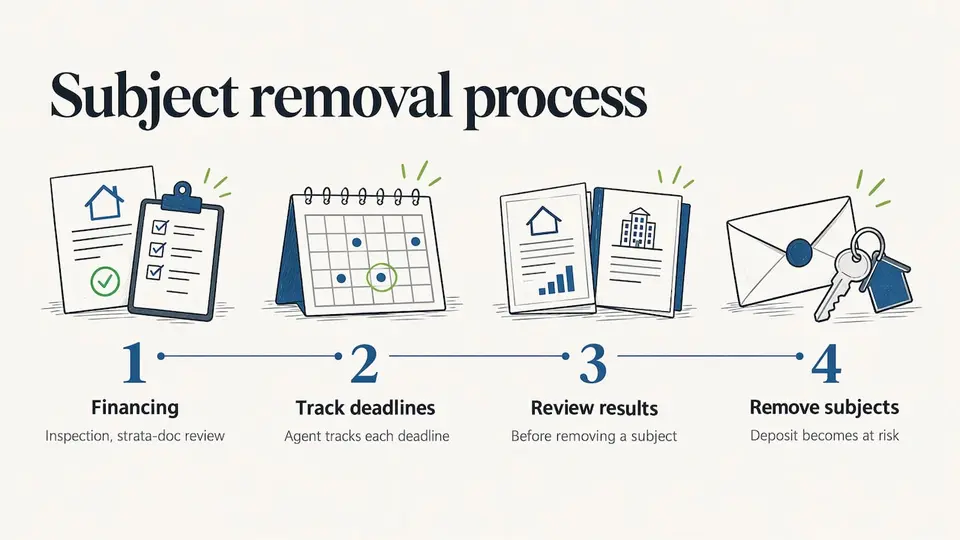
Once your offer is accepted, the clock starts on your conditions. Typical subjects in BC include financing, a home inspection and, for strata properties, a review of the strata documents. Your agent tracks each deadline, helps you arrange the inspection and the document review as part of your due diligence, and advises on what the results mean before you remove a subject. Removing subjects makes your deposit at risk, so this is the stage where you want someone watching the dates and the details.
6. Completion
Before the completion date your agent coordinates the final walkthrough, confirms inclusions are as agreed, and works with your lawyer or notary, who handles the legal transfer of title. The agent does not replace your lawyer or notary, but makes sure the pieces arrive on time so the keys change hands without surprises.
Disclosure and buyer agency agreements in BC
Before a real estate professional provides trading services to you, such as helping you find a home, BC rules require them to give you a Disclosure of Representation in Trading Services. It is not a contract. It states whether you will be represented, what the professional’s duties are and how to make a complaint to BCFSA.
A written buyer service agreement, often called a buyer agency agreement, is a separate document. It is not mandatory in every case, but BCFSA recommends having one, and with good reason. A solid agreement includes:
- the names and addresses of the parties;
- the services the brokerage will provide;
- any remuneration you may owe the brokerage, and how it is handled if the seller does not offer a cooperating commission;
- the search area and property types;
- how long the agreement lasts;
- how your personal information will be used.
Without one, it can be very hard to show what was promised if there is ever a dispute. Read the document, ask questions about every line, and confirm the term before you sign. Our guide to the BC buyer agency agreement walks through it in more detail.
Dual agency is largely banned in BC: why your own agent matters
Dual agency happens when the same licensee or brokerage acts for both buyer and seller. The problem is plain: one person cannot push for the highest price and the lowest price at the same time, so there are limits on what they can tell each side.
BC has restricted this heavily, which is why dual agency is often described as banned in BC. It is only allowed with consent and in limited circumstances, such as remote areas or where independent representation is not practical, and the licensee must give you a disclosure of the risks first. In the Lower Mainland, where there are thousands of agents, you should expect to have an agent who represents only you. Our article on limited dual agency rules in BC covers the exemptions in detail.
Who pays for buyer agent services
This is the question most first-time buyers ask first. In BC, listing agreements commonly provide for a commission that the seller pays to the listing brokerage, which then shares part of it with the brokerage representing the buyer. That is how buyers usually receive representation without writing a separate cheque, and why the service is often described as free to the buyer. Your service agreement should state clearly what, if anything, you would owe if the seller’s side does not offer a cooperating commission.
Because this part of the market is changing and negotiable, always have the arrangement in writing and understood before you start. We explain the details in who pays real estate agent fees in BC and whether realtor fees can be negotiated.
The benefits of using a buyer’s agent
The benefits are practical, and each maps to a stage above.
| Stage | What you get with an agent | What can go wrong without one |
|---|---|---|
| Search | Full MLS® detail, filters for area and property type | Missing listings or incomplete information |
| Pricing | Market comparables and sales history | Overpaying on a headline price |
| Offer | Strategy, confidential budget, drafted clauses | Weak terms or an unclear contract |
| Subjects | Deadline tracking and inspection guidance | Missed dates, deposit at risk |
| Completion | Walkthrough and coordination with your lawyer or notary | Last-minute surprises |
For investors, the same services apply with a different lens: rental income potential, strata rules on rentals, and how a building’s sales history compares across years. For condo and townhouse buyers, strata documents are where the surprises live, and having someone who reads them regularly is a real advantage. If you want a balanced view of the trade-offs, see our piece on the pros and cons of using a buyer’s agent.
How to choose your buyer’s agent
Interview more than one agent if you can. Ask about:
- Area and property type. Someone who sells Richmond townhouses every month reads that market differently from someone who mostly sells downtown condos.
- Data. Ask how the agent will back up a price recommendation. The answer should involve recent comparable sales, not instinct.
- The agreement. Ask to see the service agreement, the term and what happens if you part ways.
- Communication. Agree on how, whether by phone, text or email, and how fast you will hear back, especially when a new listing lands.
- Licensing. Confirm the licence with BCFSA’s public search before you sign.
For a fuller look at what makes an agent worth hiring, our guide on choosing a realtor lists the qualities to look for. You can also read what a real estate agent does for a home buyer in BC for the same ground from the buyer’s side of the table.
Work with Strawhomes
Strawhomes is a Lower Mainland real estate service led by Richard Morrison, REALTOR® in Vancouver. We help buyers find and buy detached houses, townhouses and condos across Metro Vancouver and the Fraser Valley, and every plan uses local market data, MLS® comparables and a clear pricing strategy.
If you are looking for a home, start with the search that matches your property type: Richard’s Custom House Search, Custom Condo Searches or Custom Townhouse Search. Or begin on the Strawhomes home page and browse by area.
Our perspective on buyer representation
Most buyers come to us after weeks of scrolling listings, and the same thing holds them back: they cannot tell whether a price is fair. Listing photos tell you very little about that. Sales history, neighbourhood data and recent comparables tell you a great deal.
That is why we build every plan around local market data and MLS® comparables. A buyer who knows what similar homes actually sold for can make a confident offer, walk away from an overpriced one, and remove subjects knowing what they are accepting.
Representation is also about timing. In this market a good listing can attract offers within days, so the preparation you do before you find the home matters: pre-approval in hand, a clear budget, a defined search area and a shortlist you trust. We help buyers across Metro Vancouver and the Fraser Valley get there, whether the target is a detached house in Surrey, a townhouse in Richmond or a condo in Vancouver.
If you are thinking about buying, talk to us before you fall in love with a specific home. The strongest offers are planned, not improvised.
Richard Morrison
FAQ
What does a buyer’s agent do?
A buyer’s agent finds and shows you homes, analyzes prices using recent comparable sales, writes and negotiates your offer, and manages your subject conditions through to completion. They are bound to put your interests first and keep your information confidential.
Do I need a written agreement with a buyer’s agent in BC?
BC does not make a buyer service agreement mandatory in every case, but BCFSA recommends one because it records the services, the area, the term and any remuneration. Before any trading services begin, you should also receive a Disclosure of Representation in Trading Services.
Can one agent represent both me and the seller?
Only in limited situations and only with your consent. BC restricts dual agency, and the licensee must explain the risks in writing first. In the Lower Mainland, you should expect to have an agent who acts only for you.
Who pays a buyer’s agent in BC?
Commonly the seller pays a commission to the listing brokerage, which shares part of it with the buyer’s brokerage. Your service agreement should state what you would owe if no cooperating commission is offered, so confirm this in writing before you sign.
Is a buyer’s agent worth it for a first-time buyer?
First-time buyers face the steepest learning curve: contracts, subject conditions, strata documents and pricing. A buyer’s agent handles those steps on your behalf and gives you data to decide with, which is why most first-time buyers choose to have one.
Is a buyer’s agent the same as a realtor or real estate agent?
In everyday use, yes. A buyer’s agent, also called a buyer’s realtor, is a real estate professional licensed in BC who works under a brokerage. What makes them a buyer’s agent is the side they act for: a listing agent represents the seller, and a buyer’s agent represents you.
Recommended

Let's Chat! Looking for a REALTOR® who can exceed your expectations? Look no further than Richard Morrison! His mission is to serve without limit & provide solutions that cater to your core needs.
• 20+ Years of Experience
• Medallion Member
• RE/MAX Hall of Fame

Latest Properties Added
| Property | Size | Price | Date Listed |
|---|---|---|---|
| 310 - 2109 Rowland Street, Port Coquitlam | 1,037 sqft | $559,000 | Nov 20, 2026 |
| 803 - 1205 Hastings Street, Vancouver | 1,398 sqft | $1,948,000 | Nov 20, 2026 |
| 213 - 601 Rochester Avenue, Coquitlam | 961 sqft | $889,900 | Nov 20, 2026 |
| 408 - 5520 Mcnaughton Road, Richmond | 858 sqft | $889,900 | Nov 18, 2026 |
| 221 - 13455 94a Avenue, Surrey | 837 sqft | $549,900 | Nov 20, 2026 |
| 607 - 3382 Wesbrook Mall, Vancouver | 1,275 sqft | $1,598,000 | Nov 20, 2026 |
| 403 - 3963 Uplands Way, West Vancouver | 1,412 sqft | $1,818,000 | Nov 19, 2026 |
| 502 - 214 Eleventh Street, New Westminster | 719 sqft | $429,000 | Nov 17, 2026 |
| 405 - 2468 Atkins Avenue, Port Coquitlam | 942 sqft | $599,000 | Nov 20, 2026 |
| 91 - 5550 Admiral Way, Delta | 1,431 sqft | $899,900 | Nov 19, 2026 |
| 4539 Victoria Drive, Vancouver | 1,520 sqft | $999,000 | Nov 20, 2026 |
| 406 - 4223 Hastings Street, Burnaby | 602 sqft | $530,000 | Nov 19, 2026 |
Start your search with Richard Morrison, Top Award Winning Vancouver Realtor
Contact Richard Morrison Top Vancouver Realtor today to find a Vancouver houses for sale and Vancouver condos for sale. Also check out Burnaby houses for sale or maybe Burnaby condos for sale. If you prefer North Shore, take a look at our listings in North Vancouver houses for sale and North Vancouver condos for sale.