How To Buy A Home In Vancouver 2027: What They Don't Tell You
To buy a home in Vancouver, get mortgage pre-approval, make an offer with subject clauses, remove them in writing and close with a lawyer or notary, budgeting at least 5% down (20% at $1.5 million or more) plus BC property transfer tax (Financial Consumer Agency of Canada, October 15, 2025; Government of BC, December 3, 2025).
Buy a house in Vancouver, BC by getting mortgage pre-approval, hiring a local realtor, and reviewing recent comparable sales. Submit an offer with conditions for financing and inspection, complete due diligence, remove subjects, and close with a lawyer or notary. Budget for closing costs, taxes, and adjustments.
In my experience, buyers who expect the Vancouver real estate market to be straightforward are surprised. After months of house hunting, multiple offer situations and unexpected closing costs that can pass $30,000, buying a home in Vancouver turns out to be more complex than it first looks.
In my experience, Vancouver’s housing market presents challenges you will not meet elsewhere in BC. The average sold price across all home types was $1,385,316 in October 2026 (Strawhomes.com Vancouver market report, October 2026). Understanding this market isn’t just helpful, it’s essential for first-time home buyers and experienced purchasers alike.
Key Takeaways
- To buy a home in Vancouver, you get mortgage pre-approval, make an offer with subject clauses, remove them in writing and close through a lawyer or notary, with a 3-business-day rescission period after your offer is accepted (Home Buyer Rescission Period Regulation, current to November 17, 2026).
- You need at least 5% of the first $500,000 and 10% of the portion above it up to $1.5 million, or 20% at $1.5 million or more, plus BC property transfer tax of 1% on the first $200,000, 2% up to $2 million and 3% above $2 million (Financial Consumer Agency of Canada, October 15, 2025; Government of BC, December 3, 2025).
- On November 20, 2026, 86.7% of active Vancouver listings listed as Apartment/Condo asked under $1.5 million, against 10.5% of listings listed as Single Family Residence (Strawhomes.com calculation from Strawhomes.com MLS data).
Understanding the Vancouver Housing Market: Home Buying Process
Let’s be honest: in my experience, the Vancouver housing market operates differently than anywhere else in Canada. Affordability challenges are well-documented in the City of Vancouver and throughout Metro Vancouver, but homeownership isn’t impossible. It requires strategic planning and realistic expectations about housing costs.
The market is characterized by limited supply, strong demand, and consistently competitive conditions. In my experience, buyers often face multiple offer situations, requiring you to make an informed decision quickly. Understanding when to buy a house in BC can give you an edge: in my experience, spring brings more inventory, while winter offers less competition.
Step 1: Master Down Payment Requirements in BC
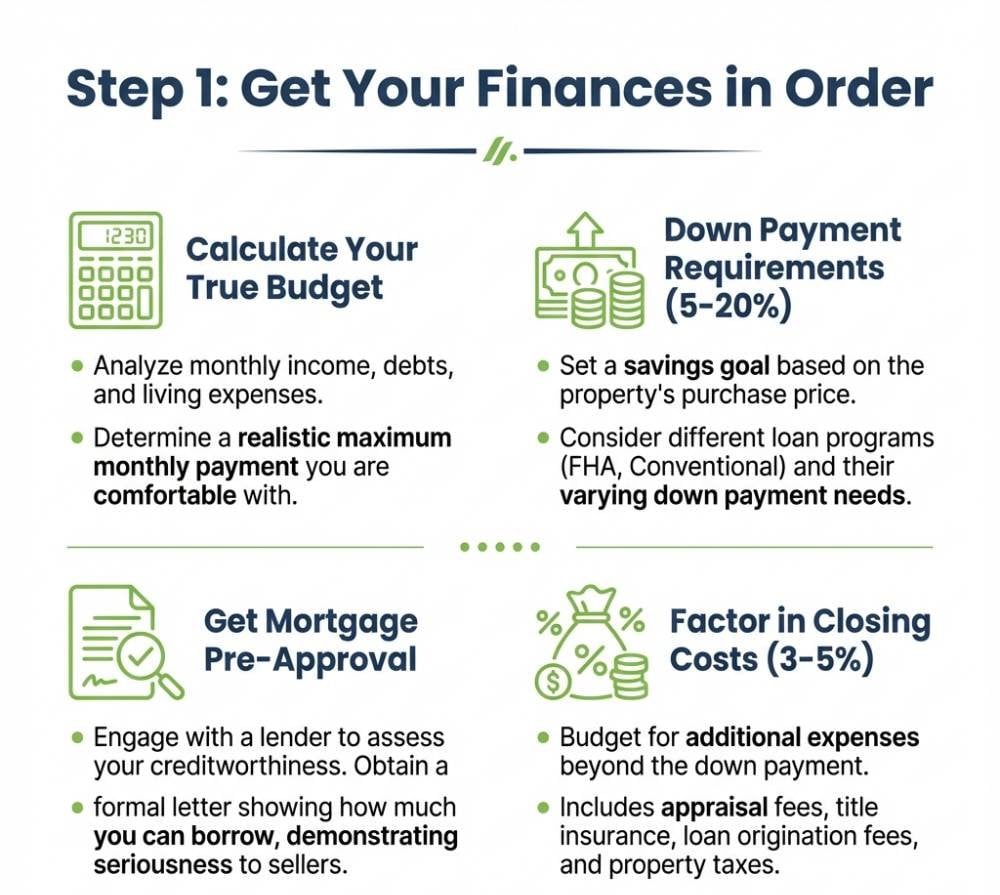
Your down payment represents the first step in the home buying process. In BC, the minimum down payment varies based on purchase price:
- $500,000 or less: 5% minimum
- $500,000 to $1.5 million: 5% on the first $500,000, plus 10% on the portion above $500,000
- $1.5 million or more: 20% required
These minimums come from the Financial Consumer Agency of Canada (October 15, 2025). The insured-mortgage price cap rose from $1 million to $1.5 million on December 15, 2024 (Department of Finance Canada, September 16, 2024).
If you’re putting down less than 20%, you’ll need mortgage insurance (premiums range from 0.6% to 4.5% of the mortgage amount, Financial Consumer Agency of Canada, October 15, 2025), which adds to the total cost of purchasing a home.
For first-time home buyers in BC, the Home Buyers’ Plan lets you withdraw up to $60,000 from your RRSPs toward a qualifying home (Canada Revenue Agency, February 17, 2026).
Understanding the distinction between deposit versus down payment is crucial. In my experience, your deposit is typically 5% of the purchase price and is paid soon after your offer is accepted, while your down payment is the total you’re contributing at closing. In addition to your down payment, budget breathing room for unexpected costs.
Home buyers in Metro Vancouver use various programs for first-time buyers to help with their first home purchase.
An insured mortgage needs at least 5% down, so a zero-down purchase is not possible with one (Financial Consumer Agency of Canada, October 15, 2025); investors can read our guide to buying rental property with no money down.
Step 2: Calculate Monthly Mortgage Payments and Housing Costs
Buyers often focus on purchase price, but your monthly mortgage payments tell the real affordability story. Beyond principal and interest payments to your lender, budget for:
- Property taxes: set each year by the City of Vancouver on your assessed value
- Home insurance: in my experience, $1,000-$2,500 yearly for detached homes
- Maintenance: in my experience, budget 1-2% of your home’s value annually
- Strata fees: for condos and townhouses, in my experience $200-$800+ monthly
Lenders use the Gross Debt Service (GDS) ratio: for a CMHC-insured mortgage, housing costs (principal, interest, property taxes, heating and half of condo fees) shouldn’t exceed 39% of gross household income, and total debt shouldn’t exceed 44% (CMHC, checked November 20, 2026).
They’re assessing how much they’re willing to lend based on what you need to pay monthly, requiring a down payment that keeps your GDS within acceptable limits.
Higher interest rates mean lower borrowing power. In my experience, a mortgage broker can help you find a lower rate, which can save thousands over a mortgage term. Whether you’re buying a condo or detached home, understanding your true monthly mortgage obligation prevents financial stress.
Step 3: Secure Mortgage Pre-Approval Before House Hunting
Obtaining a mortgage pre-approval is a critical step in the home buying process that first-time buyers often overlook. A mortgage pre-approval shows sellers you’re serious and gives you a clear understanding of your budget, which is why getting pre-approved for a mortgage comes before house hunting.
Pre-approval typically requires proof of income, down payment confirmation, and credit checks. Your lender assesses how much they’re willing to lend based on your financial profile. In my experience, pre-approvals often hold your interest rate for 90-120 days, protecting you as a home buyer if rates rise.
In my experience, working with a mortgage broker often provides more options than going directly to banks. They can find specialized products for your unique situation, whether you’re a first-time homebuyer or purchasing your dream home.
Step 4: Choose Your Neighbourhood Strategically
Vancouver isn’t one market; it’s dozens of distinct neighbourhoods in Metro Vancouver. Your neighbourhood choice impacts lifestyle and investment returns. When evaluating areas, consider transit access, schools, and future development plans.
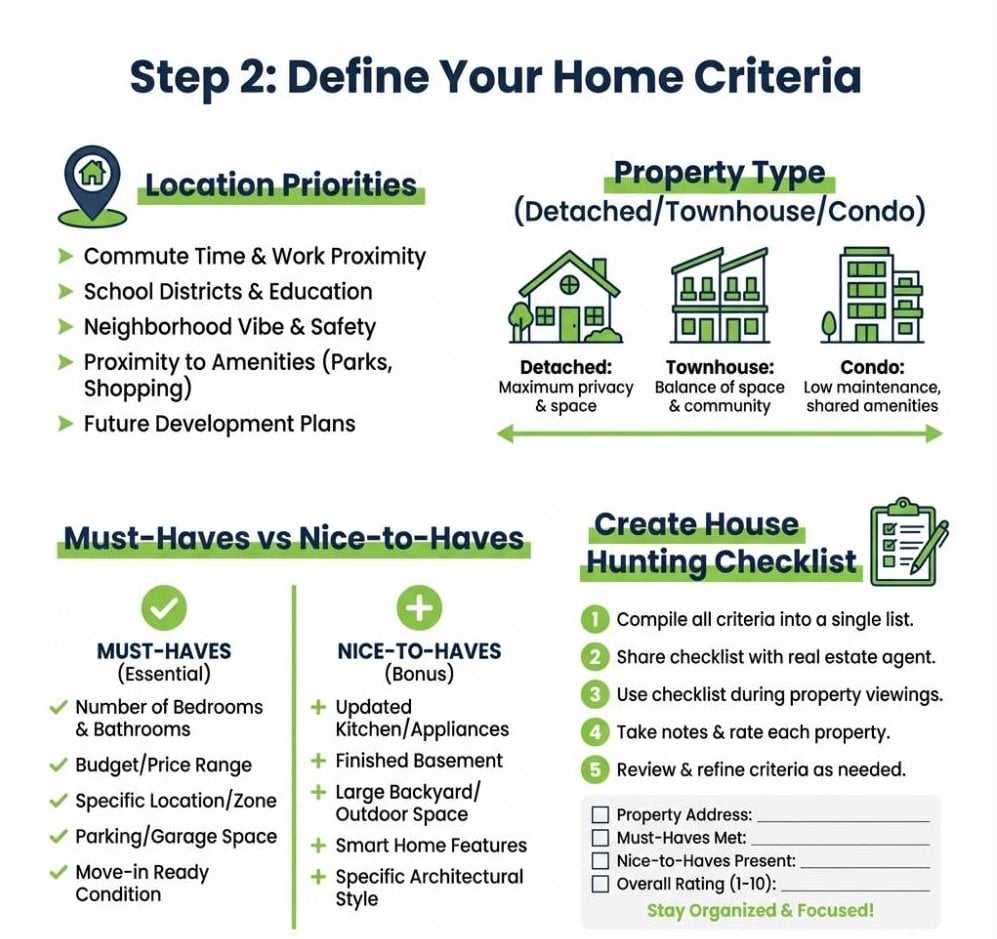
Popular Metro Vancouver locations each offer distinct advantages:
- North Vancouver: Mountain access, family-friendly atmosphere
- West Vancouver: Prestigious addresses, waterfront properties
- Burnaby: Central location, excellent transit, more affordable
- Richmond: International amenities, proximity to airport
The right neighbourhoods in Vancouver vary based on whether you’re buying a townhouse, condo, or detached home. In my experience, properties near transit typically command higher prices but offer better resale value.
Step 5: Understand Total Closing Costs
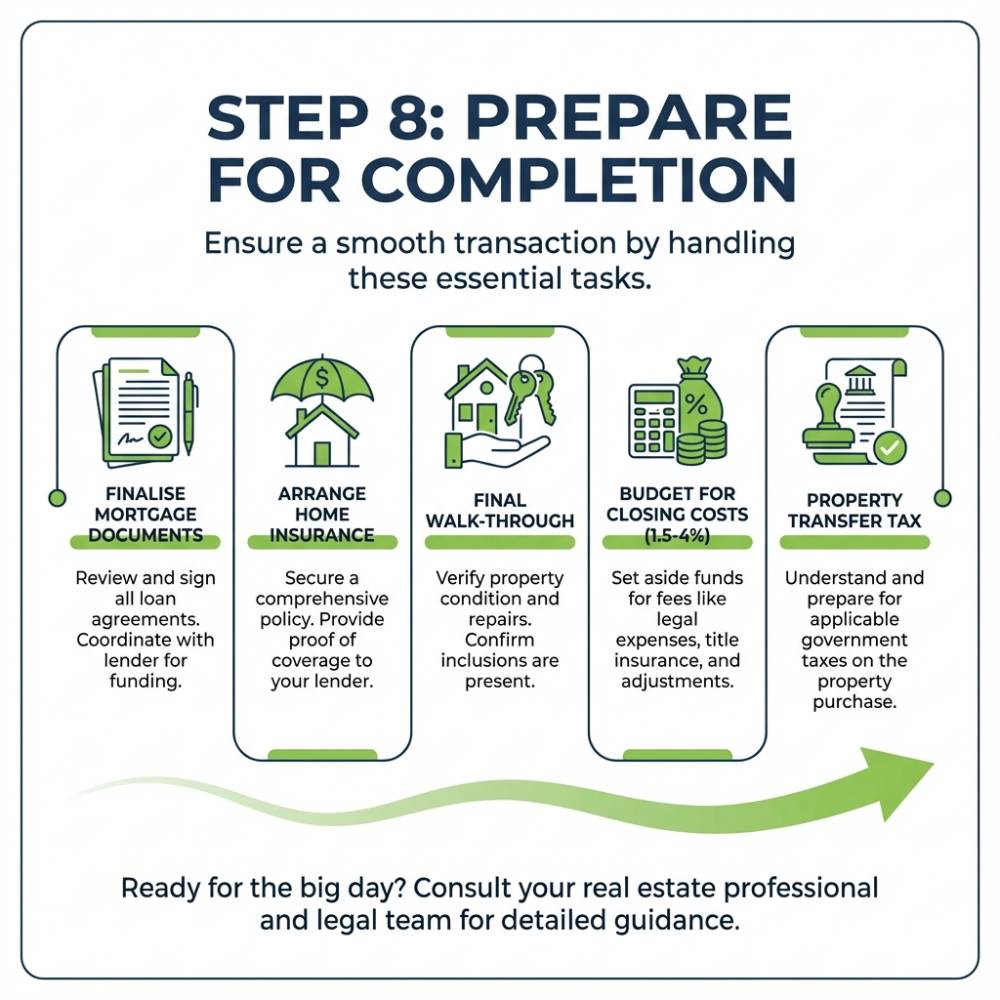
Here’s where buyers often feel sticker shock from additional costs. Closing costs in BC, in my experience, add 3-5% to your purchase price. On a $1 million Vancouver home, that’s an additional $30,000-$50,000 (Strawhomes.com calculation).
Property Transfer Tax (PTT): The largest closing cost in my experience (Government of BC, last updated December 3, 2025):
- 1% on the first $200,000
- 2% on the portion from $200,000 to $2 million
- 3% on the portion over $2 million
- A further 2% on the residential value over $3 million
First-time buyers may qualify for the BC Property Transfer Tax exemption: the full exemption applies to a home with a fair market value of $835,000 or less and saves up to $8,000, with a partial exemption up to $860,000 (Government of BC, December 3, 2025). This exemption helps first time home buyers enter the market.
Legal fees: In my experience, budget $1,500-$3,000 for your real estate lawyer. Legal fees for buying in BC vary by transaction complexity but are essential.
Home inspection: In my experience, budget $400-$800. Hiring a qualified home inspector protects your home purchase from costly surprises.
Title insurance: In my experience, budget $250-$400 for one-time protection
If you’re buying a condo, review strata documents carefully. Whether you’re buying new construction or resale, understanding what taxes you pay prevents surprises. New homes are subject to 5% GST, though GST/HST new housing rebates exist for homes under certain price thresholds (Canada Revenue Agency, September 24, 2026).
Step 6: Partner With a Real Estate Team
While you can buy without a realtor, navigating Vancouver’s competitive market without a buyer’s agent puts you at a disadvantage. A skilled real estate team brings market knowledge and negotiation expertise.
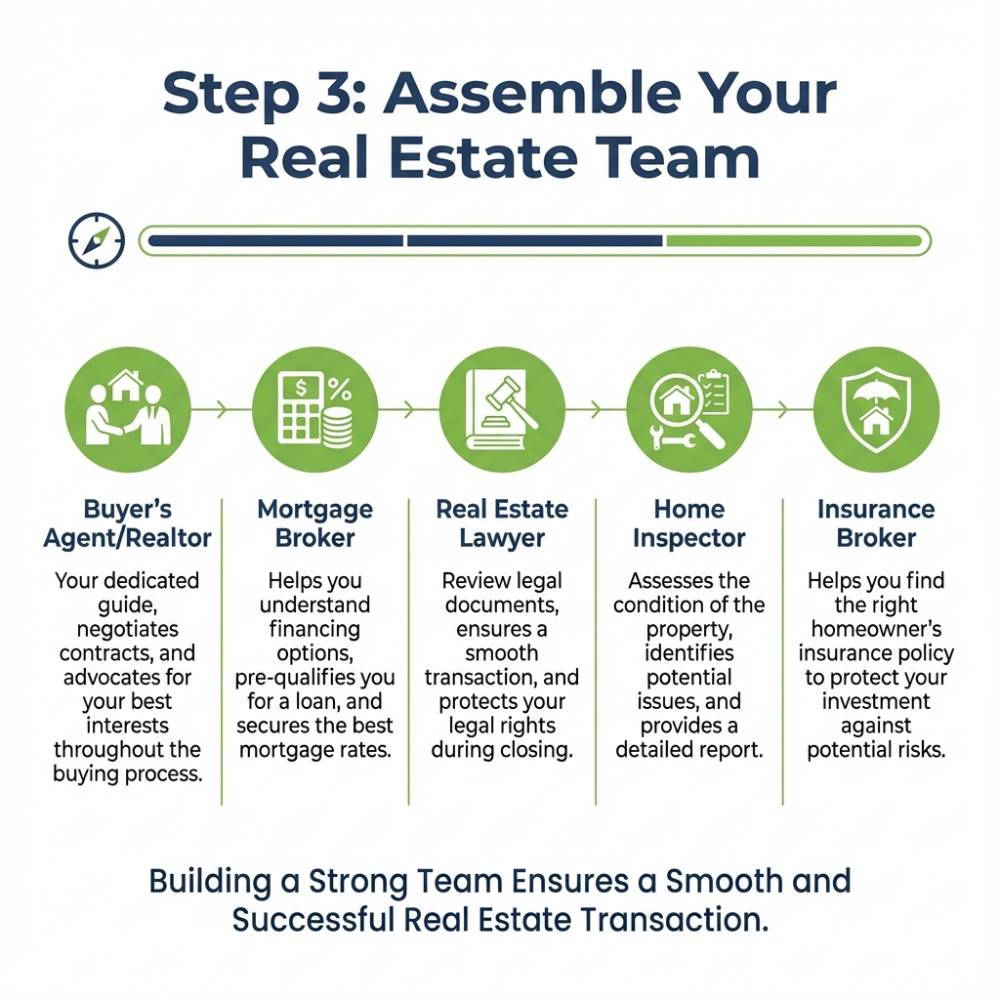
In BC, you’ll likely sign a buyer’s agent agreement outlining representation terms. Your agent should help you search for homes, understand the buying process, and write your offer when you find the right home.
Experienced agents excel at real estate negotiation, crucial when you need to negotiate in multiple offer situations. They help you navigate from open houses through to receiving the keys.
Step 7: Navigate Buying a Home in Vancouver and Making an Offer
In my experience, the home search typically means viewing 10-15 properties before finding your ideal match. Use a house hunting checklist to evaluate each property systematically against must-haves.
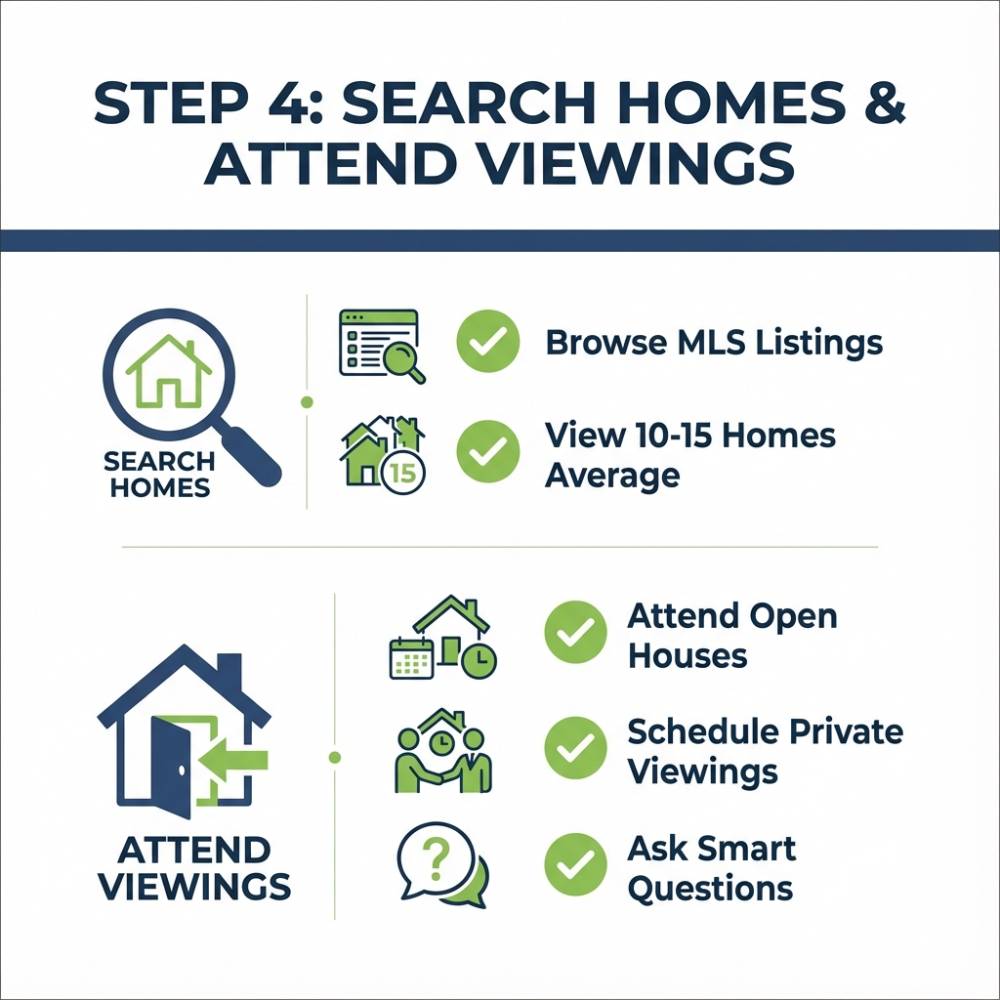
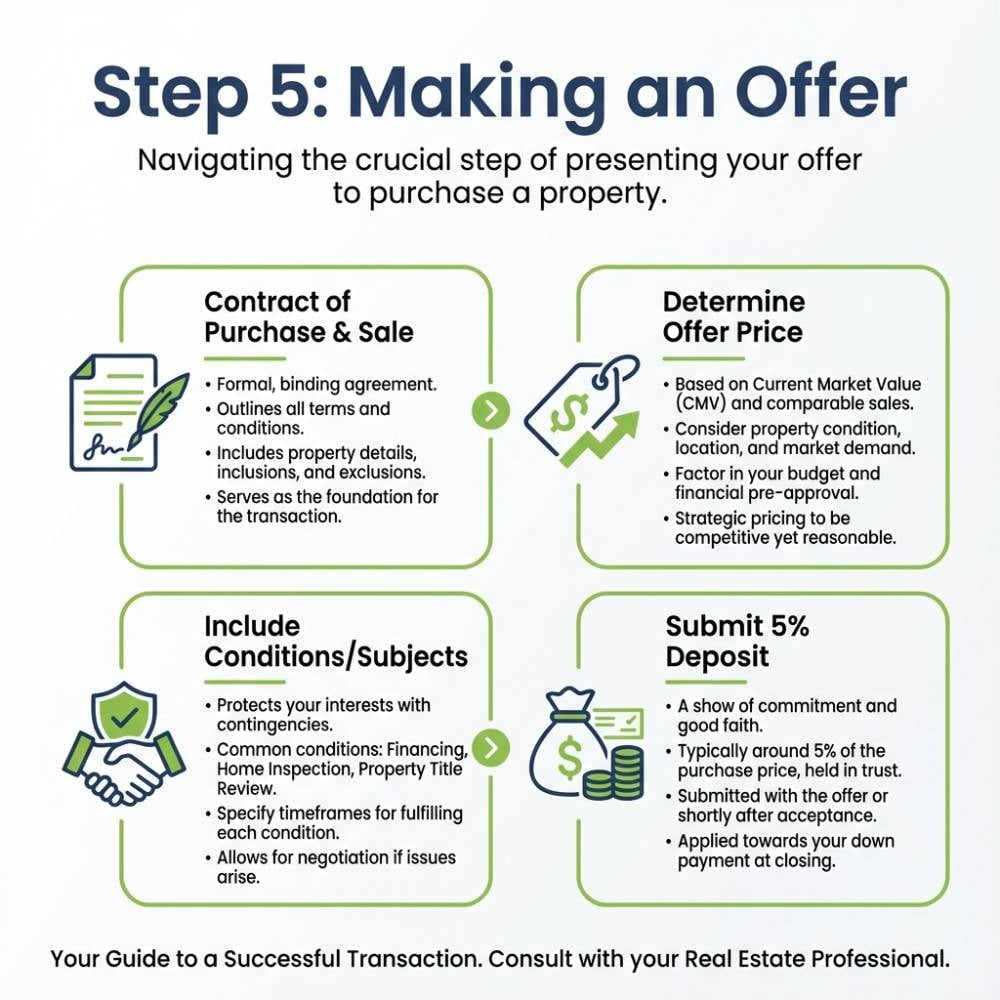
When ready to make an offer, your agent helps determine appropriate price and terms. In Vancouver, in my experience, you’ll often encounter multiple offer situations where the seller receives several competing bids. Understanding how to make an offer in BC is crucial for success.
Your offer includes:
- Purchase price: Based on comparable sales
- Deposit: In my experience usually 5%, held in trust
- Conditions: Financing, inspection, reviewing documents
- Completion date: When you receive the keys, in my experience typically 30-90 days
In my experience, sellers in the Fraser Valley and throughout Metro Vancouver often receive multiple offers. Winning in competitive situations requires strategy. Some buyers offer subject-free, but subject-free offers carry significant risk, a risk BCFSA also warns about (BCFSA, checked November 20, 2026).
When buying a property, base your first offer on comparable sales and current market conditions rather than a fixed percentage below asking. Vancouver homes sold for 96% of their listing price, in a median of 23 days, in October 2026 (Strawhomes.com Vancouver market report, October 2026), so the right number depends on the home and the competition.
Step 8: Complete Your Home Inspection
Once your offer is accepted, in my experience you typically have 5-10 days for due diligence. A professional home inspection is, in my view, non-negotiable. The inspector evaluates structural integrity, mechanical systems, and potential issues, such as expensive repairs in older homes, past renovation work, how energy efficient the home is, and whether the square footage matches the listing.
BC also gives you a home buyer rescission period: for 3 business days after your offer is accepted, you can cancel by written notice and pay the seller 0.25% of the purchase price (Home Buyer Rescission Period Regulation, current to November 17, 2026).
The right cannot be waived, and it does not apply to leased land, leasehold interests, auctions or court-ordered sales (BCFSA, checked November 20, 2026).
For condos and townhouses, thoroughly review strata documents. Look for special levies, pending litigation, or insufficient reserves. Your lawyer conducts a title search verifying the seller owns the property.
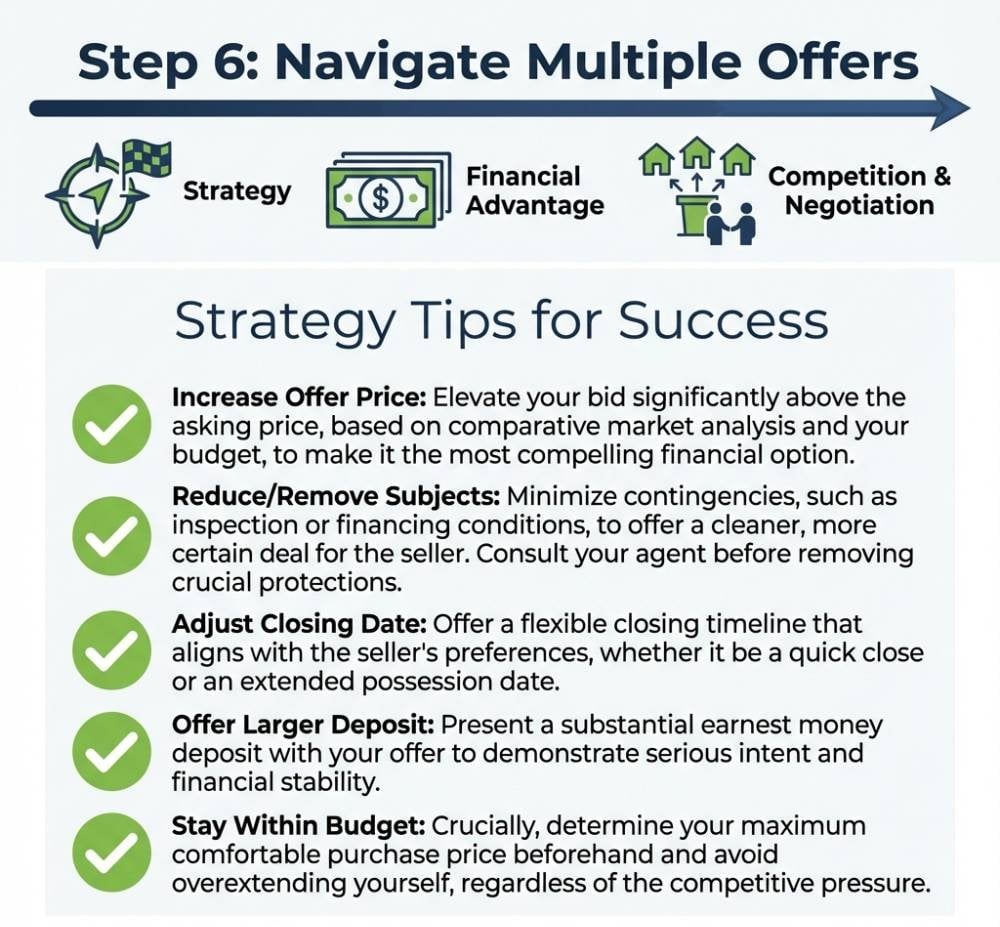
During this period, you can still walk away if a condition can’t be met after every reasonable effort, and our guide to backing out after an inspection explains how.
Your contract is already legally binding once you and the seller sign, and you remove subjects by written notice to the seller (BCFSA, checked November 20, 2026). Once you remove subjects, you’re legally committed to completing the purchase, so read our guide to removing subjects first.
Step 9: Finalize Mortgage and Prepare for Closing
After subject removal, several weeks of work happen before possession. Your lender requires an appraisal confirming the property’s value supports your mortgage amount. If appraisal comes in low, you may need to renegotiate or increase your down payment.
Your lawyer will:
- Prepare closing documents
- Calculate adjustments for property taxes and fees
- Arrange title transfer and mortgage registration
You’ll need to:
- Complete a final walkthrough
- Arrange home insurance (required for completion)
- Book movers and arrange utilities
- Provide certified funds for down payment and closing costs
Understanding what happens on closing day sets proper expectations, especially if you buy before you sell and end up carrying two homes for a while. In my experience, you’ll receive keys in the late afternoon once funds transfer and title registers in your name.
Affordability Breakdown by Property Type in The Vancouver Real Estate Market
Vancouver offers various property types, each with distinct price points:
Detached houses: The average house price in Vancouver was $2.40M in October 2026 (Strawhomes.com Vancouver market report, October 2026), though more affordable options exist in surrounding areas of Metro Vancouver.
Townhouses: A middle ground offering land ownership. Vancouver townhouses averaged $1.27M in October 2026 (Strawhomes.com Vancouver market report, October 2026). Townhouse resale value remains strong in my experience, making them popular with families seeking more space within your budget.
Condos: The most accessible entry point. Vancouver condos averaged $807K in October 2026 (Strawhomes.com Vancouver market report, October 2026).
When buying a condo, pay attention to strata fees, building condition, and rental restrictions. The average condo size in Vancouver is shrinking, but prices remain high.
Pre-construction vs resale: Comparing pre-construction and resale reveals trade-offs. Pre-construction offers customization but requires waiting years. Resale properties allow immediate occupancy.
Which Vancouver Homes Fall Under the First-Time Buyer and Insured-Mortgage Limits?
On November 20, 2026, 57.2% of active Vancouver listings of the four main listed types asked under $1.5 million, the insured-mortgage cap, so more than half of them can be bought with less than 20% down (Strawhomes.com calculation from Strawhomes.com MLS data). The property type you choose decides which buying rules you can use.
| Asking price | What it means for you |
|---|---|
| $835,000 or less | A first-time buyer can get the full BC property transfer tax exemption on the first $500,000 (fair market value; Government of BC, December 3, 2025) |
| Under $1.5 million | An insured mortgage is possible: 5% down on the first $500,000 and 10% on the rest (Financial Consumer Agency of Canada, October 15, 2025) |
| $1.5 million or more | You need at least 20% down (Financial Consumer Agency of Canada, October 15, 2025) |
Condos are the Vancouver type where both limits still apply widely, while far fewer listings listed as Single Family Residence ask under $1.5 million, so a house usually means 20% down. If your budget depends on a small down payment or the first-time buyer exemption, plan your search around condos and townhouses first.
- Apartment/Condo, Asking $835,000 or less: 55.5%
- Apartment/Condo, Asking under $1.5 million: 86.7%
- Townhouse, Asking $835,000 or less: 10.2%
- Townhouse, Asking under $1.5 million: 63.8%
- Half Duplex, Asking $835,000 or less: 0.8%
- Half Duplex, Asking under $1.5 million: 35.8%
- Single Family Residence, Asking $835,000 or less: 0.0%
- Single Family Residence, Asking under $1.5 million: 10.5%
- All four types, Asking $835,000 or less: 28.8%
- All four types, Asking under $1.5 million: 57.2%
Sources: Strawhomes.com calculation from Strawhomes.com MLS data (active for-sale listings with the city field Vancouver, leases excluded, asking prices, November 20, 2026); Government of BC; Financial Consumer Agency of Canada.
Common First-Time Buyer Mistakes
After representing 150 home buyers, I’ve seen these mistakes repeatedly:
Maxing out your budget: Just because a lender is willing to lend a certain amount doesn’t mean you should spend it all. Leave breathing room for life’s unexpected costs.
Ignoring total costs: Focus on monthly payments, not just purchase price. An average home with high strata fees costs significantly more than one with lower fees.
Making emotional decisions: In my experience, it is easy to fall in love with a home at the first showing. Knowing if a house is right requires balancing emotion with practical analysis of the property type, location, and costs.
Waiving inspection: While removing conditions can win in competitive situations, it carries enormous risk. Always protect your home purchase with proper due diligence, even when a home looks move-in ready.
Essential Vancouver-Specific Considerations
Several unique factors affect Vancouver home buyers:
Speculation and vacancy tax: Properties must be your principal residence to avoid additional taxes. The BC speculation tax affects some buyers.
Foreign buyer restrictions: The Canada foreign buyer ban is the federal Prohibition on the Purchase of Residential Property by Non-Canadians Act. People who are not Canadian citizens or permanent residents are, with some exceptions, prohibited from buying residential property in Canada until January 1, 2027 (Department of Finance Canada, February 4, 2024).
Budget 2026 proposes to extend the ban to January 1, 2029 for existing and resale homes, while lifting it for new residential properties (Budget 2026, Annex 4, November 5, 2026). The extension is a proposal, not yet law.
High overall costs: Understanding why Vancouver real estate is expensive helps set realistic expectations. Limited land, strong demand, and geographical constraints drive prices.
Buy versus rent: Given high prices, you may wonder about buying versus renting in Vancouver. This depends on your financial situation and long-term plans.
How to Choose the Right Vancouver Realtor and Brokerage
Choosing the right Vancouver realtor starts with questions about local real estate knowledge before you sign anything. In my experience, the right realtor knows your neighbourhood and even your building, and can explain how recent homes for sale there compared with their final prices. If you are thinking about buying, ask them to walk you through recent sales nearby.
Ask who will actually handle your file. In my experience, some teams put a senior name on the marketing while a junior agent runs your showings and offers, so confirm who writes and negotiates your offer. Also ask whether the brokerage is full-service and whether its realty office belongs to the local real estate board with MLS access.
In my experience, an agent can help you set a clear strategy before you explore homes. Smart buyers, in my experience, set alerts for new listings, check the latest listings each week, plan each open house and agree on the right strategy for multiple offers before they book showings.
Ask how the agent reads market cycles and a seller’s marketing. In my experience, an agent who works with both buyers and sellers can tell from a listing’s photos, pricing and offer date whether the seller expects competition or is open to negotiation. Those signals shape how you price your offer when buying a house.
Comparing Vancouver Neighbourhoods and Nearby Cities for the Right Home
Comparing Vancouver neighbourhoods and nearby cities helps you find the right Vancouver area for your budget and daily life. In my experience, Vancouver West areas such as Kitsilano, Point Grey and Yaletown draw buyers who want beaches, the university area or the urban lifestyle.
Mount Pleasant on the east side, in my experience, appeals to buyers who want character streets and local shops.
In my experience, Downtown suits buyers who want to walk to work and shops, and a downtown condo or loft trades space for convenience. Compare each condominium building’s strata documents, layout and amenities carefully before you choose.
SkyTrain lines connect Vancouver to Burnaby, Coquitlam, Port Moody and Surrey, and in my experience, buyers who commute by SkyTrain find more space for their budget in those cities.
In my experience, North Vancouver and West Vancouver buyers choose the North Shore mountains for trails, skiing and views.
Some buyers widen the search across Greater Vancouver, the area served by the Metro Vancouver Regional District, to South Surrey, White Rock and Langley. Others, in my experience, go further into the Fraser Valley to Abbotsford and Chilliwack, trading a longer commute for a larger home.
In my experience, the right home in the right neighbourhood matters more than a famous address. Weigh a condo, townhouse or house in each area, and visit on a weekday and a weekend before you decide where your dream home in British Columbia should be.
Your Path Forward
Buying a house in Vancouver requires preparation, patience, and strategy. Understanding the home buying process, from budgeting for maintenance costs to navigating the complexities of purchasing a property in Metro Vancouver, positions you for success.
How long it takes to buy a house in BC varies dramatically. Some buyers find their dream home within weeks; others search for months before finding the right property at the right price.
Whether you’re a first-time buyer or experienced homeowner, following this roadmap helps you navigate this complex market. You’ll make an informed decision, avoid costly mistakes, and ultimately secure a property meeting your needs.
From understanding minimum down payment requirements to calculating monthly mortgage payments, from choosing the perfect neighbourhood to working with a knowledgeable real estate team, each step builds toward your goal of homeownership.
Your Vancouver home purchase is achievable with the right approach. Start by getting mortgage pre-approval, understanding your true budget, and partnering with professionals who can guide you through this journey. The dream of owning a home in Vancouver is within reach.
Ready to buy a home in Vancouver? The process doesn’t have to be overwhelming when you have the right guidance. From understanding the local market to navigating financing options and closing deals, having an experienced realtor makes all the difference.
Contact Richard Morrison today to start your home buying journey. With expert knowledge of Vancouver real estate, Richard will help you find your perfect property and negotiate a strong deal for your future.
How Strawhomes.com and Richard Morrison Help With Buying a Home in Vancouver
If you are buying a home in Vancouver and want the price, rules and subjects checked before you commit, this guide is for you. Strawhomes.com publishes the Vancouver listing and market data behind it. Next step: ask Vancouver real estate agent Richard Morrison, who has represented 150 home buyers, to review a listing and your offer terms with you.
Frequently Asked Questions
How competitive is the Vancouver real estate market?
Vancouver homes sold in a median of 23 days at 96% of their listing price in October 2026 (Strawhomes.com Vancouver market report, October 2026). In my experience, well-priced homes in popular neighbourhoods still draw multiple offers.
How much money do I need to buy a home in Vancouver?
You need at least 5% of the first $500,000 and 10% of the rest up to $1.5 million, or 20% at $1.5 million or more (Financial Consumer Agency of Canada, October 15, 2025). In my experience, also budget 3-5% of the price for closing costs, led by property transfer tax.
Do I need a realtor for buying a house in Vancouver?
No, you can buy a home in Vancouver without a REALTOR®. In my experience, a buyer’s agent helps with pricing against comparable sales, subjects and multiple offer situations.
Can a home buyer back out after the seller accepts an offer in BC?
Yes, within 3 business days of acceptance you can rescind by written notice and pay the seller 0.25% of the purchase price (Home Buyer Rescission Period Regulation, current to November 17, 2026). After that, you can only walk away if a subject condition can’t be met after every reasonable effort (BCFSA, checked November 20, 2026).
Can a non-Canadian buy a home in Vancouver?
Generally no: until January 1, 2027, the federal Prohibition on the Purchase of Residential Property by Non-Canadians Act bars people who are not Canadian citizens or permanent residents (Department of Finance Canada, February 4, 2024). Budget 2026 proposes extending it to January 1, 2029 for existing and resale homes and lifting it for new homes, as a proposal only.
What should I check before buying a condo or townhouse in Vancouver?
Make your offer subject to a satisfactory review of the strata documents, including engineer’s reports, plus inspection and financing (BCFSA, checked November 20, 2026). In my experience, look for special levies, pending litigation and the contingency reserve fund.
How can I choose a Vancouver realtor with local real estate knowledge?
Ask each Vancouver realtor about their local real estate knowledge, who will handle your file day to day and which brokerage they work with. In my experience, the right realtor answers clearly and shows you recent sales in your target neighbourhood.
Why is getting pre-approved for a mortgage the first step before you view a listing?
Getting pre-approved for a mortgage sets your budget and shows sellers you are serious before you make an offer. In my experience, a pre-approval can also hold your interest rate for a period, which protects you if rates rise.

Let's Chat! Looking for a REALTOR® who can exceed your expectations? Look no further than Richard Morrison! His mission is to serve without limit & provide solutions that cater to your core needs.
• 20+ Years of Experience
• Medallion Member
• RE/MAX Hall of Fame

Latest Properties Added
| Property | Size | Price | Date Listed |
|---|---|---|---|
| 1153 - 5515 Boundary Road, Vancouver | 517 sqft | $459,900 | Nov 19, 2026 |
| 408 - 5520 Mcnaughton Road, Richmond | 858 sqft | $889,900 | Nov 18, 2026 |
| 208 - 5938 Olive Avenue, Burnaby | 1,130 sqft | $1,028,900 | Nov 19, 2026 |
| 5945 12th Avenue, Delta | 2,533 sqft | $1,200,000 | Nov 20, 2026 |
| 10598 124 Street, Surrey | 4,169 sqft | $1,549,888 | Nov 20, 2026 |
| 81 - 27272 32 Avenue, Langley | 1,997 sqft | $599,900 | Nov 20, 2026 |
| 1903 - 1238 Melville Street, Vancouver | 1,058 sqft | $899,000 | Nov 20, 2026 |
| 2711 - 13685 102 Ave Avenue, Surrey | 673 sqft | $500,000 | Nov 20, 2026 |
| 807 - 950 Cambie Street, Vancouver | 1,173 sqft | $899,000 | Nov 19, 2026 |
| 1708 Paddock Drive, Coquitlam | 3,142 sqft | $1,599,000 | Nov 19, 2026 |
| 403 - 2138 Old Dollarton Road, North Vancouver | 1,143 sqft | $1,050,000 | Nov 20, 2026 |
| 2308 - 501 Pacific Street, Vancouver | 410 sqft | $498,000 | Nov 20, 2026 |
Start your search with Richard Morrison, Top Award Winning Vancouver Realtor
Contact Richard Morrison Top Vancouver Realtor today to find a Vancouver houses for sale and Vancouver condos for sale. Also check out Burnaby houses for sale or maybe Burnaby condos for sale. If you prefer North Shore, take a look at our listings in North Vancouver houses for sale and North Vancouver condos for sale.