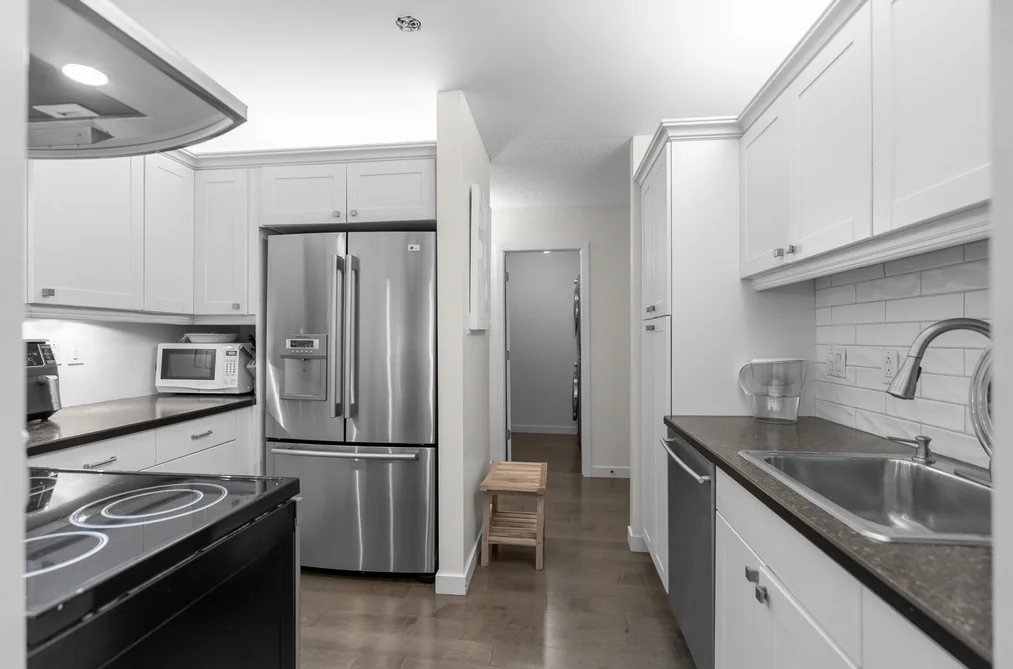
For Sale
0 days
- $599,900
- 1 bed
- 1 bath
- 622 sqft
MLS® R3178763
•Team 3000 Realty Ltd.
Browse Resort listings near Greater Vancouver and read the rental covenants, servicing and seasonal running costs before you write an offer on a mountain home.
Resort listings within reach of Greater Vancouver carry rules a buyer should read before touring, because a rental pool covenant or a phase restriction changes what you actually own.
Ask your lawyer to pull title early. Many alpine developments in Whistler and Sun Peaks register a covenant that limits occupancy to a set number of nights a year, or requires the unit to sit in a managed rental pool whenever you are not using it. Others restrict the property to nightly accommodation only, which rules out living there. None of this is obvious from the photographs, and the difference between a family home you can occupy freely and a room in a hotel programme is written on title rather than in the listing remarks.
Confirm how water, sewer and power reach the home, and who maintains the road in winter. A property on a community water system carries an annual levy; one on a well needs a flow test written into your subject clauses. Ask what the strata or resort association charges, what those fees cover, and whether a major project is coming on the roofs or the lifts. Insurance is priced differently for a home that sits empty midweek, and a lender may want proof of a monitored alarm before funding.
Request the bylaws, the minutes and the depreciation report, and read them for what owners argue about. Parking, ski storage, pet rules and short-term rental enforcement are the recurring subjects, and the minutes tell you the truth the marketing will not. Ask how the mountain performs through a warm summer as well as a thin winter, since a community that empties out in July has a different feel from one with hiking and biking traffic. Then ask your mortgage professional which lenders across Canada will finance the specific type of title on offer, because several will not.